Revised efficiency standards tendered for distribution transformers
S. Himmelstein | January 16, 2023New energy-efficiency standards for three categories of distribution transformers have been proposed by the U.S. Department of Energy to improve U.S. power grid resiliency, lower utility bills and curb carbon-dioxide (CO2) emissions. The diversification of transformer core technology is intended to conserve energy and reduce costs. Almost all transformers produced under the new standard would feature amorphous steel cores, which are significantly more energy efficient than those based on traditional, grain-oriented electrical steel.
Current efficiency standards apply to liquid-immersed, low-voltage dry-type and medium-voltage dry-type distribution transformers. DOE’s proposed rule would amend the energy conservation standards for all three categories.
The new standards are projected to reduce U.S. CO2 emissions by 340 million metric tons over the next 30 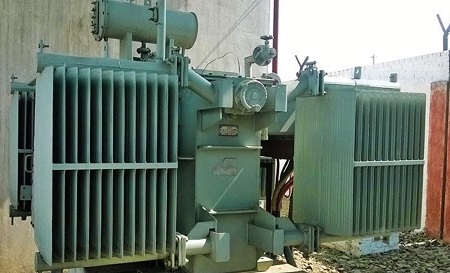 Source: skselectricals.inyears, equivalent to the annual emissions of 90 coal-fired power plants. The proposed rule is also expected to generate over 10 quads of energy savings and approximately $15 billion in savings to the nation from 30 years of shipments.
The agency is focused on diversifying domestic steel production where capacity can be expanded, such as in the production of amorphous steel used in advanced transformers. In support of these efforts, DOE is also finalizing implementation guidance for the distribution transformer and extended product system rebate programs established by the Energy Act of 2020. This program promotes replacement of energy-inefficient distribution transformers and extended product systems with more-efficient replacements.
[Learn more about distribution transformers on GlobalSpec.com]
DOE will host a public meeting to solicit feedback on the proposed rulemaking from stakeholders on February 16, 2023. If adopted within DOE’s proposed timeframe, the new rule will come into effect in 2027.