Polymer Breakthrough Could Improve Water Purification
Engineering360 News Desk | December 30, 2015Cornell University researchers have discovered a material that can be used to filter water more quickly and thoroughly than traditional activated carbon. A team led by Will Dichtel, associate professor of chemistry and chemical biology, has developed a porous form of cyclodextrin—the same material found in some fabric softeners—that displays uptake of pollutants through adsorption at rates up to 200 times greater than carbon filters.
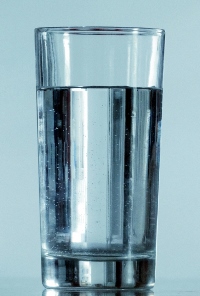 The discovery brings the potential for low-energy, flow-through water purification. Image credit: Morguefile.com.Activated carbons have the advantage of larger surface area than polymers made from cyclodextrin—“more sites for pollutants to stick to,” says Dichtel—but they don’t bind pollutants as strongly as cyclodextrin. “What we did is make the first high-surface-area material made of cyclodextrin, combining some of the advantages of the activated carbon with the inherent advantages of the cyclodextrin." He adds that the materials remove pollutants in seconds as the water flows by, so there is potential for low-energy, flow-through water purification. What’s more, the cyclodextrin-containing polymer features easier, less expensive regeneration, so it can be reused with no observed loss in performance. Where activated carbon filters must undergo intense heat treating for regeneration, tests have shown that cyclodextrin filters can be washed at room temperature with methanol or ethanol. And a drop-off in performance following regeneration has not been observed, the researchers say.
Dichtel, a 2015 MacArthur Foundation “Genius Award” recipient for work he carried out on porous polymers, says he will use part of the prize money to further research into cyclodextrin water purification, ultimately setting the stage for a product that can be manufactured on a large scale.