Toolkit tackles solutions to energy storage-grid interconnection barriers
S. Himmelstein | May 16, 2022The steady increase in renewable energy deployment in the U.S. coincides with greater reliance on energy storage by consumers and electric distribution system operators. However, rapid integration of energy storage systems into the grid is hampered by technical and regulatory barriers, particularly those related to interconnection. The Building a Technically Reliable Interconnection Evolution for Storage (BATRIES) project provides recommended solutions and resources for eight critical storage interconnection barriers to enable safer, more cost-effective and efficient grid integration of storage.
The BATRIES consortium, headed up by the Interstate Renewable Energy Council and supported by the U.S.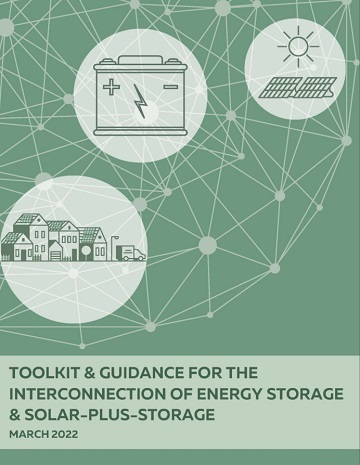 Department of Energy’s Solar Energy Technologies Office, has assembled a free toolkit and guide to address energy storage interconnection roadblocks.
Solutions cited in the Toolkit and Guidance for the Interconnection of Energy Storage and Solar-Plus-Storage are nationally applicable and can be applied in diverse states and markets across the U.S. The toolkit covers:
- Lack of inclusion of storage in interconnection rules, and the lack of clarity as to whether and how existing interconnection rules (and related documents, such as application forms and agreements) apply to storage systems
- Lack of inclusion of acceptable methods that can be used for controlling export of limited-and non-export systems in interconnection rules
- Evaluation of non- and limited-export systems based on unrealistic operating assumptions that lead to overestimated grid impacts
- Lack of clarity regarding the impacts of inadvertent export from limited- and non-export systems and the lack of a uniform specification for export control equipment response times to address inadvertent export
- Lack of information about the distribution grid and its constraints that can inform where and how to interconnect storage
- Lack of ability to make system design changes (other than downsizing the system) to address grid impacts and avoid upgrades during the interconnection review process
- States that have not incorporated updated standards into their interconnection procedures and technical requirements
- Lack of defined rules and processes for the evaluation of operating schedules