Machine learning optimizes HVAC control
S. Himmelstein | April 21, 2022Machine learning technology was used by Pennsylvania State University researchers to develop a method for HVAC control mechanisms that balance energy cost, comfort and efficiency while enabling fast computing. Data from model predictive controllers was used to train the model to determine the best times of day to cool a building.
"Detailed model predictive controllers may not be able to compute solutions fast enough for real-time operations in some buildings," explained the researchers. "We used machine learning to generate a simple, easily interpretable set of rules for reducing building cooling energy and operating costs — without needing to run model predictive controllers in real time."
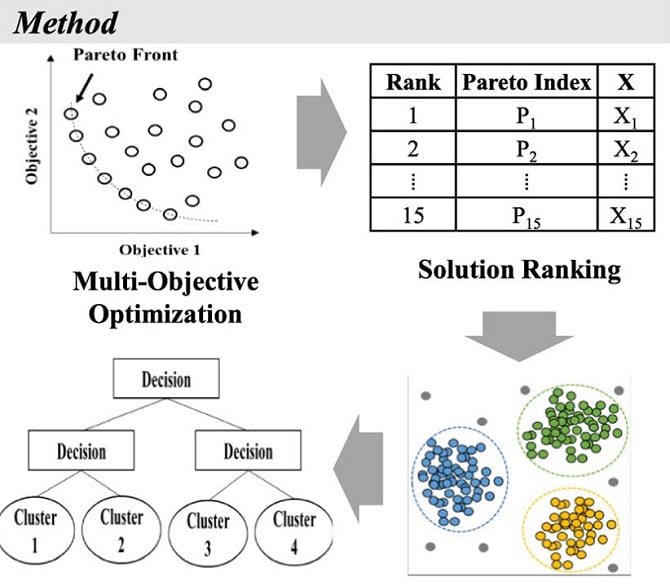 A new framework for building HVAC controls balances efficiency, comfort and cost without significant computation time. Source: Energy (2021). DOI: 10.1016/j.energy.2021.122691
Rules based on the data collected and analyzed from model predictive controllers delivered energy efficiency and energy cost levels comparable to those of a model predictive controller in action. As reported in Energy, the best rule sets attained up to 97% of the energy savings and 89% to 92% of the cost objective savings of the detailed model predictive controller. Such savings were realized with significantly faster computation, as the new method required less than one second to schedule a control strategy for one day versus the hours needed by the original model predictive controller.