Bio-based copolymer resin helps consumer electronics industry achieve net-zero carbon emissions goals
Engineering360 News Desk | February 18, 2022Chemical manufacturer SABIC has introduced LNP ELCRIN EXL7414B copolymer, the company’s first bio-based polycarbonate (PC) copolymer to help advance the consumer electronics industry’s net-zero carbon emissions goals. The new copolymer is the first grade in an expanding portfolio to secure the International Sustainability and Carbon Certification Plus (ISCC+) designation. It is formulated with over 50% bio-based content from waste materials, which do not compete with the food chain, according to the mass balance approach. A preliminary SABIC internal assessment indicates that each kilogram of the new bio-based resin provides 2 kg of carbon dioxide reduction as compared to the fossil-based alternative.
The prestigious Chinese brand realme chose LNP ELCRIN EXL7414B copolymer resin for the battery cover of its brand-new GT 2 Pro smartphone that launched on January. 4, 2022, in China. “Our collaboration with SABIC to successfully incorporate this new bio-based copolymer in our GT 2 series smartphone has helped us achieve competitive differentiation and a stronger sustainability posture,” said Chase Xu, global vice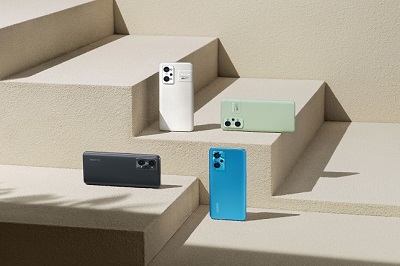 Source: SABIC president and chief marketing officer, realme. “The use of bio-based materials is an important selling point for consumers, who increasingly seek out sustainable products. Further, the adoption of LNP ELCRIN EXL copolymer resin has enabled our company to advance its environmental goals without any compromise in product performance. This application is the latest result of our productive, ongoing relationship with SABIC.”
In addition to lowering carbon footprint by reducing the use of fossil-based feedstocks, LNP ELCRIN EXL7414B copolymer resin delivers exceptional performance for demanding electronics applications. It uses a non-brominated, non-chlorinated flame retardant formulation that meets the UL 94 V0 standard at 0.6 mm.
Both LNP ELCRIN EXL7414 and new LNP ELCRIN EXL7414B copolymer resins help address the harmonized International Electrotechnical Commission’s new IEC 62368-1 standard, which replaced the previous IEC 60065 Audio Video and IEC 60950 IT Equipment standards with stronger safety requirements. For example, this new standard, which took effect in December 2020, requires hazardous energy sources such as lithium-ion batteries to be contained via built-in safeguards to help prevent the energy from transferring to device users.
The excellent processability of the bio-based LNP ELCRIN EXL7414B copolymer resin enables ultra-thin part designs that save weight and space, and offers opportunities for shorter cycle times and higher throughput versus standard PC. The new material also provides excellent low-temperature ductility (-40° C ) for impact strength when a device is dropped, and good chemical resistance to withstand ultraviolet-cured painting.