
US Army awards contract to develop 300 kW laser weapon system
Marie Donlon | November 04, 2021The Rapid Capabilities and Critical Technologies Office (RCCTO) of the U.S. Army has awarded a contract to both General Atomics Electromagnetic Systems (GA-EMS) and Boeing to construct a 300 kW class laser weapon system.
According to the contract, the solid state distributed gain high energy laser weapon system prototype will feature two seventh generation lasers developed by GA-EMS. Meanwhile, Boeing is expected to contribute the laser beam director, precision acquisition, tracking and pointing software to the design.
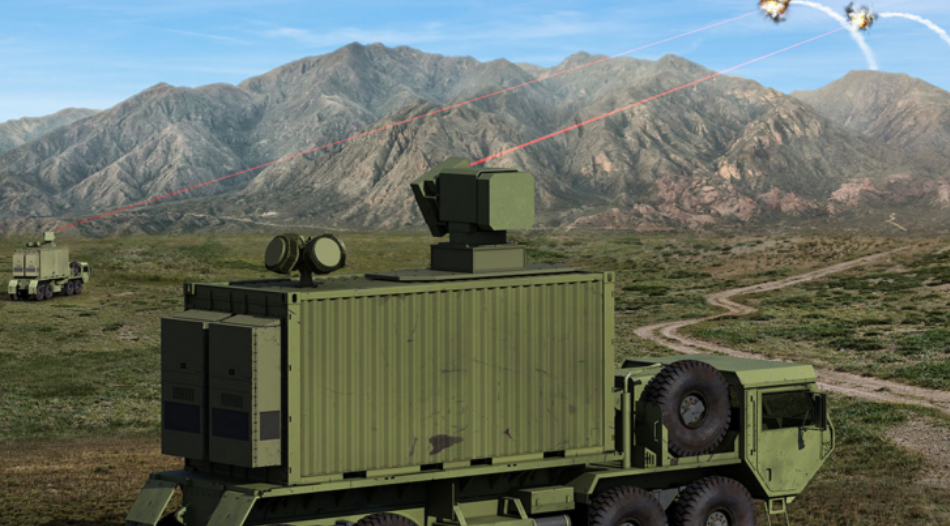 Source: General Atomics Electromagnetic Systems (GA-EMS)
"The high power, compact laser weapon subsystem prototype that GA-EMS will deliver under this contract will produce a lethal output greater than anything fielded to date," Scott Forney, president of GA-EMS said.
Once developed, the system could be employed against unmanned aerial vehicles (UAVs) and missiles.



...and how long will it take us to install this giant laser on Dr Evil's Moon Base?
Does a mirror make for a good counter-measure? How about a corner reflector?
In reply to #2
Good thought, but …
The mirror must meet some stringent constraints: it must be lightweight, easily positioned to protect the missile from the incoming laser attack, and very efficient at reflecting the beam or able to dissipate absorbed energy without damaging the protected missile by heating. Some have proposed a highly polished metal shell as a means of protecting a missile or drone, but maintaining the necessary reflectivity in field conditions would be problematic, as anyone who has tried to keep a mirror finish on aluminum alloys knows. Corner reflectors have the additional problem of not being aerodynamic, and would be anything but camouflage on a ground vehicle. They would likely increase vulnerability to incoming projectiles.
Early experiments with a high-powered airborne missile defense laser built into a B-747 (MIRACL) showed that the aiming mirror had to be optically perfect or it would shatter instantly when the laser was fired.
The most probable countermeasure at this time would be heat-dissipating ablative material similar to what is used on orbital re-entry vehicles. It only has to last long enough for the missile to get to its target, or for counter-fire to take out the laser. On the other hand; this requires sacrificing range or payload mass. A rotating projectile might be able to delay destruction, but not if it is already nearing its thermal limits due to aerodynamic friction.
It's going to be an arms race between the ability to avoid or get rid of laser-induced heat and increasing laser power or shifting laser wavelength to defeat a countermeasure.