
"Starved" bacteria will eat metal
Marie Donlon | October 12, 2021A scientist from Chile’s University of Antofagasta has discovered bacteria that eats metal.
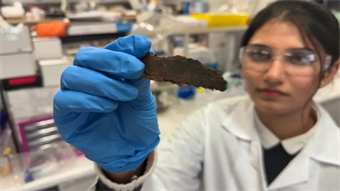
Biotechnologist Nadac Reales has determined that an iron-oxidizing bacteria called Leptospirillum — a microorganism that can survive in harsh environments — can eat metal in a matter of days, thereby promising to reduce waste associated with the mining industry.
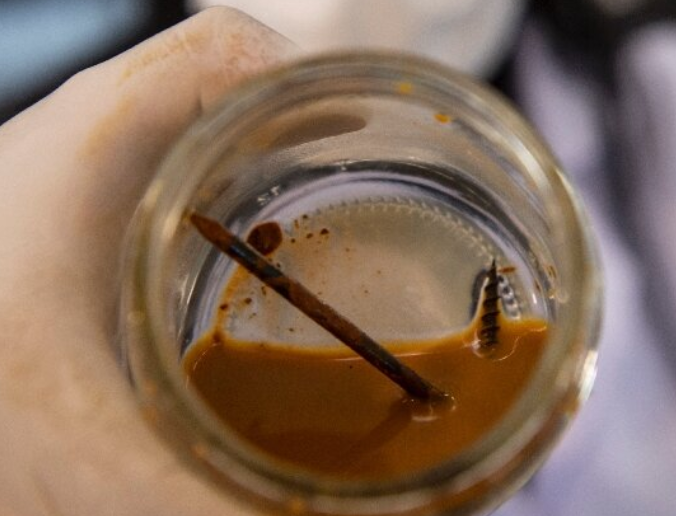 Source: Nadac Reales
Leptospirillum — which has been used in industrial bioleaching, wherein metals are converted to a soluble form for extraction — reportedly thrive in acidic environments where it previously took roughly two months to "eat" through a nail.
However, Reales improved that timeframe by starving the bacteria so that the bacteria devoured a nail in just three days, leaving behind a liquid residue called lixiviant, which reportedly improves copper recovery via a process called hydrometallurgy.
According to Reales, the residue also removes copper from rock in a more environmentally friendly process than currently employed chemical leaching methods.
Additionally, tests revealed that the bacteria are not harmful to humans or the environment.
I wonder if it could eat the nuclear spent rods? Could it survive the radioactivity to do so? Would the residue still be radioactive? Roaches can survive the microwave.
In reply to #1
Would the residue still be radioactive?
The residue would still be radioactive. Radioactivity is a property of the atoms' nuclei, which are untouched by the chemical processes carried on by the bacteria. The radioactivity would increase the mutation rate of the bacteria.
Could it survive the radioactivity to do so?
Microbes are thriving in the radioactive remains of the Chernobyl reactor...
Microbial Life in the Chernobyl Exclusion Zone - The Microbial Menagerie