LED device detects lethal gases, rotting food
Marie Donlon | August 17, 2021Technology developed by a team of researchers from the University of Melbourne, U.S. Lawrence Berkeley National Laboratory, the University of California, Berkeley, and the Australian Research Council Centre of Excellence for Transformative Meta-Optical Systems (TMOS) identifies assorted gases — including lethal ones — invisible to the unaided eye, thereby improving the safety of consumers, firefighters, miners and military personnel.
The new device features an infrared (IR) light emitting diode (LED) that is tunable to assorted wavelengths of light and works much like IR spectrometers that are capable of identifying different materials via analysis of their IR signatures — but without the bulkiness of standard IR spectrometers.

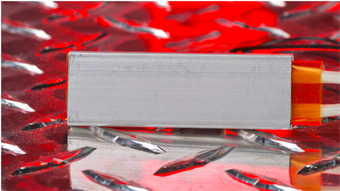
"Our new technology bonds a thin layer of black phosphorus crystals to a flexible, plastic-like substrate, allowing it to be bent in ways that cause the black phosphorus to emit light of different wavelengths essentially creating a tunable infrared LED that allows for the detection of multiple materials," University of Melbourne Professor Kenneth Crozier said. "This technology could fit inside smartphones and become part of everyday use."
The researchers suggest that eventually the device could be placed within appliances such as refrigerators to detect spoiling products like meat, which releases various gases as bacteria multiply. Such gases signal that the meat is spoiling and thus no longer suitable for consumption.
Additionally, the team suggests that the device could be used to determine the authenticity of consumer products such as handbags, revealing whether an expensive purse is composed of real leather or a less expensive substitute, based on what the device detects.
Likewise, the research team suggests that the device could improve the safety of those working in high risk environments — such as firefighters, miners and military personnel — when used to identify potentially lethal gases from safe distances. This can be accomplished, for instance, if the thin devices were incorporated into drones used to circle structures engulfed by fire.
The research appears in the journal Nature.