Neurala VIA: Flexible vision AI implementation
June 23, 2021Manufacturing today is experiencing an increased rate of technology adoption. But every production facility has its own technology deployment guidelines, from standardized hardware to network configurations, connectivity and security requirements. While greenfield projects exist, where all new components are selected, more often manufacturers are tasked with improving the efficiency of their production line while integrating what is already there. Therefore, implementation of a new technology solution has to be extremely flexible.
As manufacturers pursue process improvements through innovation, they face several challenges. According to a 2020 survey conducted by Gartner, “more than 57% of manufacturing leaders say that their organization lacks skilled workers to support digitization plans.” The decreasing availability of workforce, coupled with the desire for intuitive software, means that manufacturers should consider the ease-of-use for any new solution. With Neurala VIA, customers can reduce product defects while increasing inspection rates and preventing production downtime — all without requiring previous artificial intelligence (AI) expertise.
Many traditional machine vision or visual AI providers require very specific implementations — expensive smart cameras with proprietary software, custom lighting or large vision controllers. Neurala’s VIA software supports a high level of hardware and software customization with little effort. With Neurala VIA, customers can use the hardware that fits within their guidelines. Neurala’s flexibility allows customers to create a system that best fits both the application needs and plant requirements, while being cost-effective from a procurement, implementation and maintenance perspective.
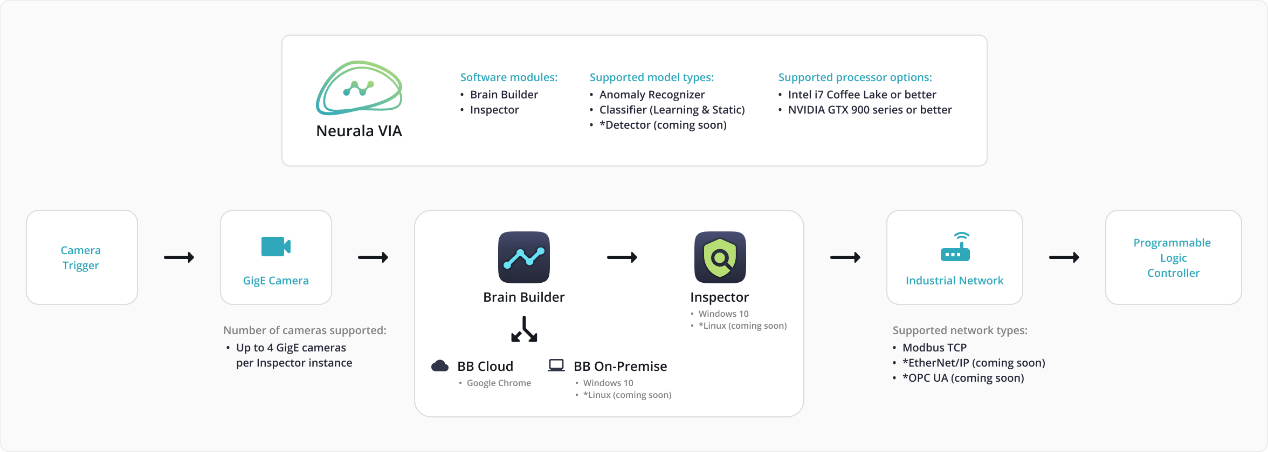 Figure 1: Illustration of Neurala VIA . Source: Neurala
Software flexibility
Neurala VIA is comprised of two different software components: Brain Builder and Inspector. This allows for the maximum amount of deployment options. Note that users do not need to install both on the same machine, but still have a high level of integration.
Solution flexibility
- On-premise: Meet the requirement of having all data controlled on site, or deploy when a plant has no outside connectivity.
- Cloud: Use when multi-site options or expedited training is necessary.
- Local server: Combine on-premise and cloud, and use a local networked server. Allow multiple versions of Inspector to connect back to a single instance of Brain Builder.
- No connectivity: Great for OEMs who might be delivering a system complete with the visual AI inspection, but would prefer not to give their customers access to the models themselves. They can train on their own instance of Brain Builder, export the model files and then import them into Inspector. This also allows users to train on a cloud instance of Brain Builder and deploy on an instance of Inspector that is not networked.
Hardware flexibility
Choice of hardware is an important factor for sourcing, installation and maintenance. Manufacturing plants have agreements with certain vendors, keep certain parts on hand and have staff trained to use particular software. Being flexible and enabling choice allows customers to use something they already have or that is easy to source. It also allows users to build the system with the specifications that meet the needs of the application.
Because Neurala’s VIA solution is compatible with all GigE Vision, customers can use whatever camera they want, whether it costs $300 or $15,000. Users can also choose the lighting and the type of image sensor that will best fit the application, and without the need for an expensive smart camera or a specific brand.
Neurala’s architecture flexibility also allows customers to use the computer that best suits the needs of the application. The company is currently supporting Windows 10, with Linux support to be released in the second half of 2021.
Network flexibility
There are many industrial networks to choose from, some that are more easily expandable and adaptable than others. Neurala understands that each manufacturing facility has different network requirements. Therefore, their software has been designed to offer choices when it comes to network outputs. Neurala’s initial product functions as a ModbusTCP server, and they are working to expand into OPC UA and EtherNet/IP (and others as the need arises). Since these will all be configurable through Inspector, this provides users with the maximum amount of flexibility to meet system requirements.
Model flexibility
With Neurala VIA, several types of AI models within the same product are supported. No need to buy different modules to get different supported models. Neurala’s patented L-DNN technology makes their models incredibly flexible: no need for industry specific back bones or long training sessions.
Neurala supports Classifiers, allowing items to be categorized. These are best when there is a balanced dataset. These are the most traditional types of models, and are great when there are several images of the different types of objects or defects that the user is trying to categorize. This is not always possible in manufacturing, where images of good parts are plentiful and images of defects are harder to capture. Anomaly Recognizers take advantage of the “good” images, and only train on them, and when running, they flag anything that is not a known anomaly, allowing all sorts of defects to be captured.
In addition to their currently available model types, Neurala will support Detection Networks, allowing users to locate where in an image a certain item or defect is. This allows users to count objects in an image, locate an object in the image, run a targeted Classifier or Anomaly Recognizer model, determine the location of an object, or determine the size and location of a defect.
Take an in-depth look into the Neurala VIA solution or visit the Neurala website.
Want to see Neurala VIA in action? Watch this video.