Robotic system identifies, sorts and separates recyclable waste
Marie Donlon | June 24, 2021Researchers from the Centre for Internet of Things (IoT) and Telecommunications at the University of Sydney are developing a method for recycling problematic soft plastics — plastic bags and cling wrap, for example — using an automated robotic system that identifies, sorts and separates different kinds of recyclable waste.
Working in conjunction with waste management companies IQ Renew and CurbCycle, the team is developing a robotic system that will use a combination of artificial intelligence (AI) and computer vision to identify, sort and separate recycling waste, thereby creating separate streams so that soft plastics can be recycled instead of becoming entangled in waste separation machinery, oftentimes resulting in contamination or mechanical failure.
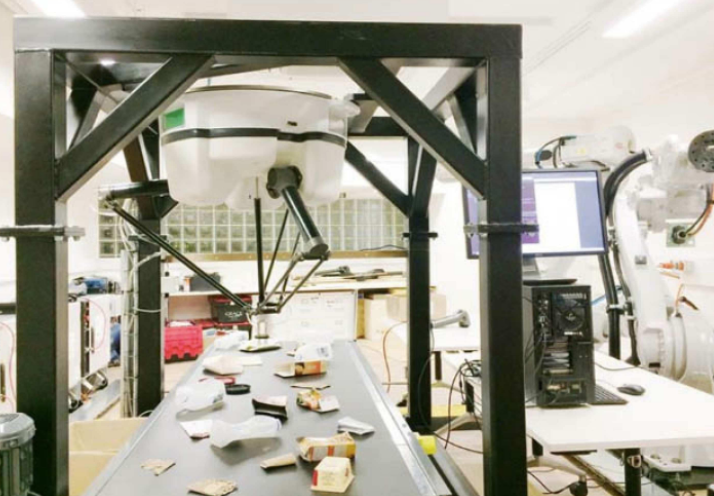 The recycling robot. Source: University of Sydney
Because soft plastics are a significant contributor to landfill and have been problematic for the circular economy and waste management sector due to the absence of a safe sorting method, the researchers are now employing IoT techniques to develop a robot capable of solving the problem while also automating a typically manual task that is both repetitive and unsafe.
According to the researchers, the automated robotic system will be incorporated into IQ Renew's material recovery facility in conjunction with CurbCycle's soft plastic recovery program wherein the household recyclables are segregated into bags and placed in curbside recycling bins. The robotic system will reportedly be capable of identifying “CurbyTagged” bags and separating them from other waste. Once separated, those bags will be recycled into oils and other chemicals via a patented Catalytic Hydrothermal Reactor (Cat-HTR) technology.
"This highly innovative materials handling process can help extend the range of the Cat-HTR conversion technology to now include increasingly challenging waste streams, highlighting the benefit of close industrial and academic collaboration," explained the researchers.