Common switchgrass modified to clean up explosives residue
Marie Donlon | June 01, 2021Researchers from the University of Washington and the U.K.’s University of York are using genetically modified switchgrass to remove toxic chemicals left behind by military munitions.
The switchgrass, which is commonly used to prevent soil erosion, was reportedly modified with the addition of two genes from bacteria capable of breaking down RDX — a synthetic chemical often used as a military explosive.
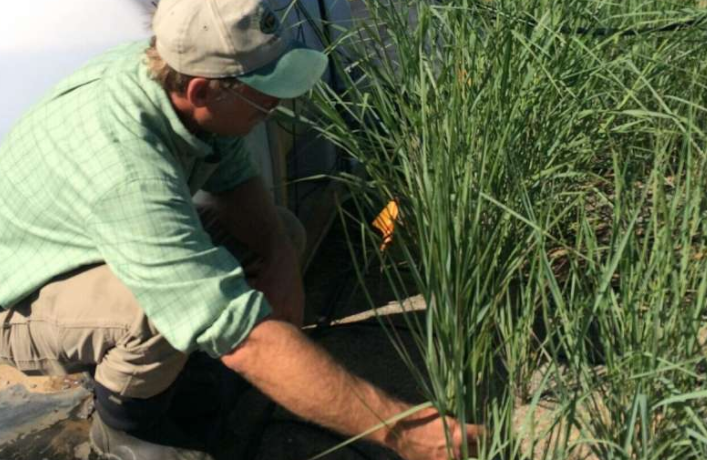 Source: Neil Bruce
According to the researchers, the genetically modified switchgrass detoxifies residues associated with RDX left behind on military firing ranges, minefields and munitions dumps, where they ultimately pollute groundwater.
With few sustainable or cost-effective solutions for removing RDX from such sites, the team grew the genetically modified switchgrass in RDX-contaminated military firing ranges. There, the researchers report that once grown, the grass degraded RDX to non-detectable levels — degrading RDX at a rate of 27 kg per hectare, according to the team.
The research — Field trial demonstrating phytoremediation of the military explosive RDX by XplA/XplB-expressing switchgrass — appears in the journal Nature Biotechnology.