Study: AI system could be used to help environmentalists stop deforestation
Siobhan Treacy | January 07, 2021Researchers from Oregon State University have found that satellite programs have lowered the amount of deforestation in Africa in the last two years.
Planetary and land change affects how much carbon dioxide reaches the atmosphere. Deforestation is a key factor behind the 40% increase in atmospheric carbon dioxide since the start of the industrial revolution. The annual CO2 atmospheric increase over the last six decades due to the industrial revolution is around 100 times faster than increases that are a result of natural causes.
The Global Land Analysis and Discovery System (GLAD) was implemented in three continents in 2016 and, within the first two years of its operation produced millions of dollars of carbon sequestration benefits. In the GLAD system, subscribed users launch the accompanying free web app called Global Forest Watch, receive email alerts when the algorithm detects deforestation and then take action to save the forest. The alerts were created by the University of Maryland’s Global Land Analysis and Discovery Lab based on high-res satellite imaging from NASA’s Lands at Science program.
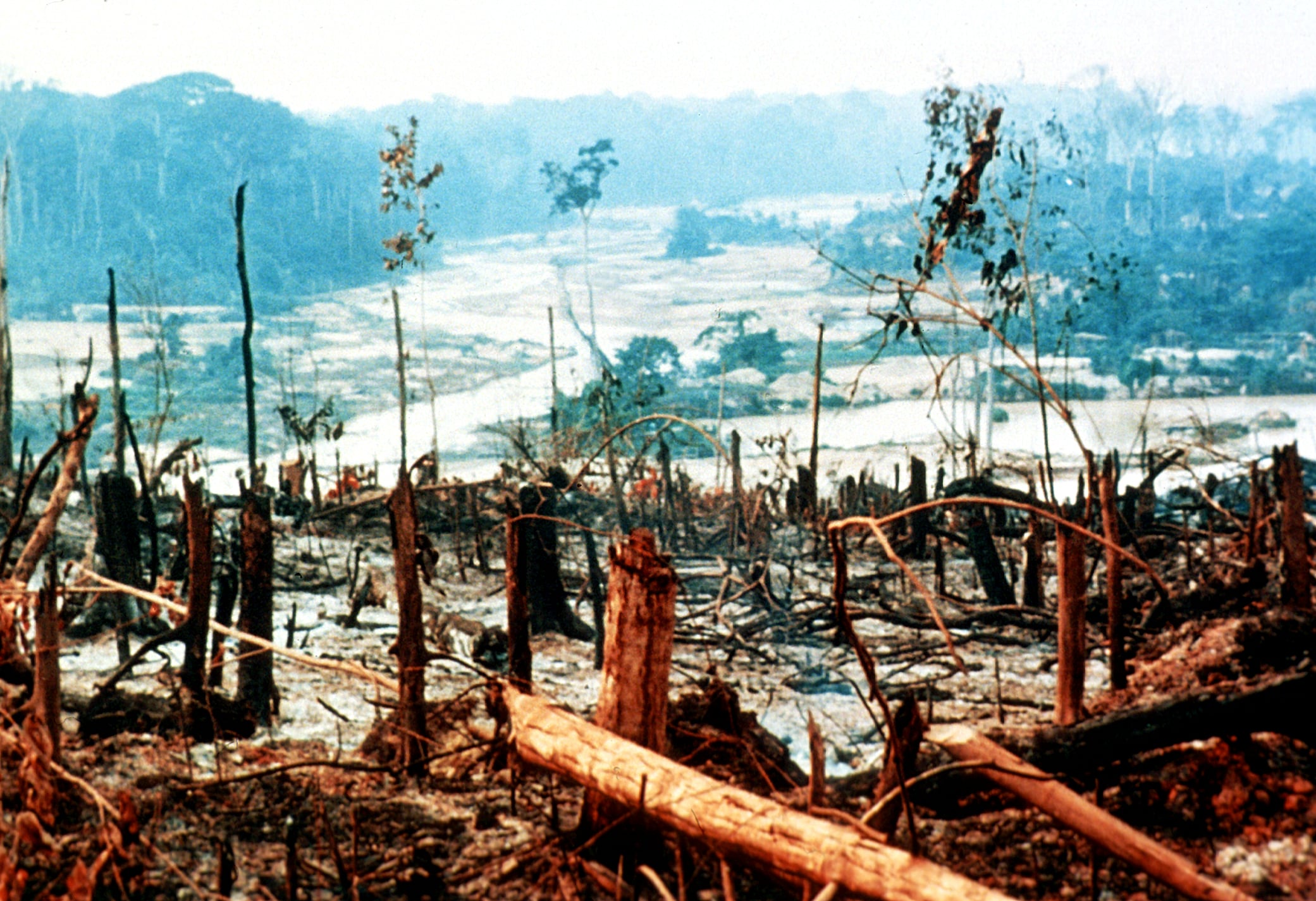 Amazon deforestation Source: Oregon State University
In the past, government agencies and groups had to depend on reports of deforestation from volunteers or forest rangers. But people cannot be everywhere all of the time, so depending on this kind of data gathering is unreliable and can often lead to errors.
The team looked at deforestation in 22 nations in South America, Africa and Asia from 2011 to 2018. This was five years before the GLAD launch and two years after. The data showed that GLAD’s first two years of launch in Africa saw 18% less forest loss than the previous five years.
There was no change detected in South America and Asia, but the team believes there are a few reasons for this outside of the system. First, some countries in Africa already had monitoring systems in place, which meant Africa had more added GLAD effort. Secondly, Colombia and Venezuela, major parts of South America’s sample, saw times of significant political unrest during the two years of GLAD operation.
The team used the societal cost of carbon to estimate the alert system’s worth. The societal cost of carbon is the marginal cost to society of each additional metric ton of greenhouse gases that reaches the atmosphere. They found that the system is worth $149 million to $696 million in the two years it has been in operation in Africa.
The team notes that the program is young and its potential is not yet fully realized. With more sign-ups and more decisions to intervene in deforestation, the system’s influence may grow even more.
A paper on this research was published in Nature Climate Change.