Researchers to secure inventory, ballots with DNA
Marie Donlon | November 06, 2020Researchers at the University of Washington and from tech giant Microsoft have developed a tagging system alternative to the traditional barcodes QR codes and radio frequency identification (RFID) tags used to secure goods in a store.
The system, called Porcupine, is a DNA-derived tagging system that feature molecular tags that can be programmed and read in seconds using a portable nanopore device.
In lieu of radio waves or printed lines, the researchers used strands of dehydrated synthetic DNA, otherwise known as molecular bits, that are imperceptible to the unaided eye. The individual molecular bits feature 96 unique barcode sequences along with a DNA fragment from a set of predetermined sequence lengths. With the Porcupine system, binary zeros and ones from the digital tag are indicated by the presence or absence of each of the 96 molecular bits.
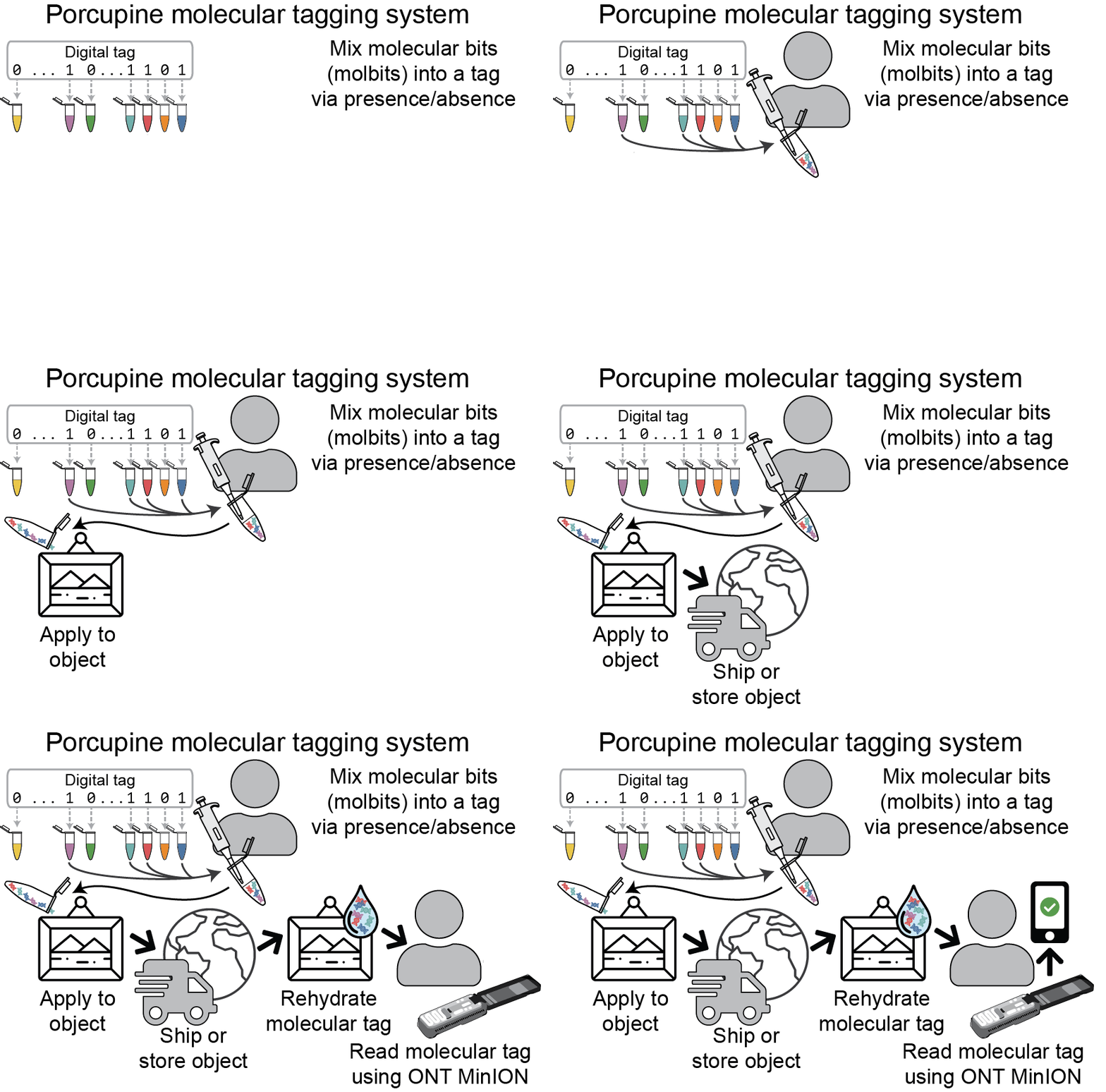 University of Washington and Microsoft researchers have developed a DNA-based molecular tagging system. Source: Kathryn Doroschak/University of Washington
"We wanted to prove the concept while achieving a high rate of accuracy, hence the initial 96 barcodes, but we intentionally designed our system to be modular and extensible," said co-author Karin Strauss, senior principal research manager at Microsoft Research and affiliate professor in the Allen School. "With these initial barcodes, Porcupine can produce roughly 4.2 billion unique tags using basic laboratory equipment without compromising reliability upon readout."
In addition to securing inventory in stores that would be almost impossible to tamper with, the molecular tagging could also be used to distinguish authentic products from forgeries and to track documents, such as voter ballots, in future elections.
The research appears in the journal Nature Communications.