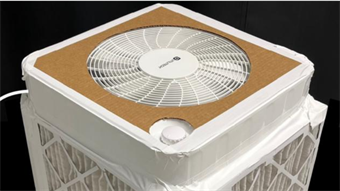
Portable sensor provides quick detection of lead in water
S. Himmelstein | August 28, 2020A new tool for the detection of lead in aquatic sediments is promised by a low-cost electrochemical sensor platform engineered at Rutgers University. The portable lab-on-a-chip eliminates the delays associated with water quality testing in conventional laboratory settings by returning results in minutes.
In situ, real time monitoring is achieved without the use of complicated pretreatment steps. The integrated 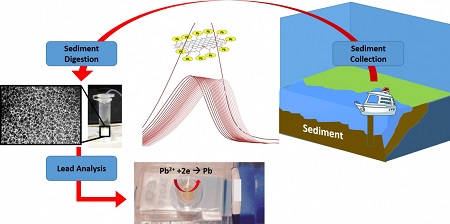 Sediments collected by a ship can be rapidly tested for toxic lead with a new portable lab-on-a-chip device. The miniature device extracts lead from a sample and purifies it, using graphene oxide as a lead detector. Source: Azam Gholizadeh/Rutgers Universitysensor is based on a 3D porous matrix for purification and extraction of lead onto a graphene oxide thin film that serves as an active sensing material. The device was tested as an in-situ platform to detect lead directly in complex sediment samples and was demonstrated to have a detection limit of 4 ppb and a linear working range.
The sensor could potentially find use in detecting mercury, copper and other toxic metals in industrial, commercial and residential water supplies. The researchers will continue to validate sensor performance and improve its durability before the device is commercialized.