Personnel safety made easy: Altech's SMART Safety System
August 06, 2020In the Industry 4.0 era of innovative technologies, connected technologies have the potential to bolster employee safety on the factory floor. This “smart” capability enables the manufacturer to gain new efficiencies and workplace effectiveness while making production operations more responsive to a modern workplace.
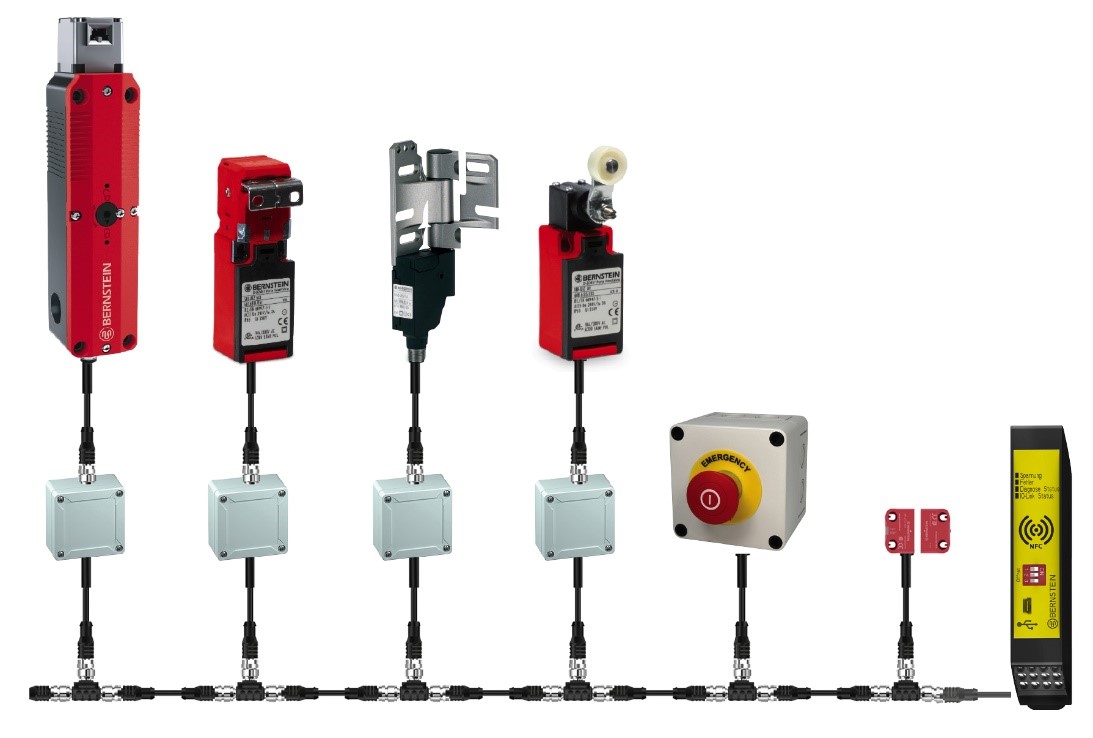 Figure 1. The SMART Safety System is a value-added safety system for any manufacturing environment: Source: AltechAltech Corp’s SMART Safety System is a value-added safety system for any manufacturing environment. It enables safety professionals to transform the way they monitor, measure, document and manage a safety program. The real-time data collection and continuous process electrical connectivity design informs the production environment of safety concerns. The SMART Safety System provides such benefits as reduction in manufacturing fault masking, ease of installation, improved predictive maintenance and data collecting, and improved employee safety.
Reduction in manufacturing fault masking
Fault masking is a potentially unsafe condition in the machinery safety circuit system, which allows the safety system to be reset even if a fault condition such as a damaged or broken switch or sensor is present. The SMART Safety System monitors moveable guarding devices like doors, gates, panels and hoods and shuts down or prevents startup of a machine when a device is not properly closed. It can lead to significant production downtime and frequent employee injuries, and can create poor employee morale, provide low product output and impose corporate profit loss.
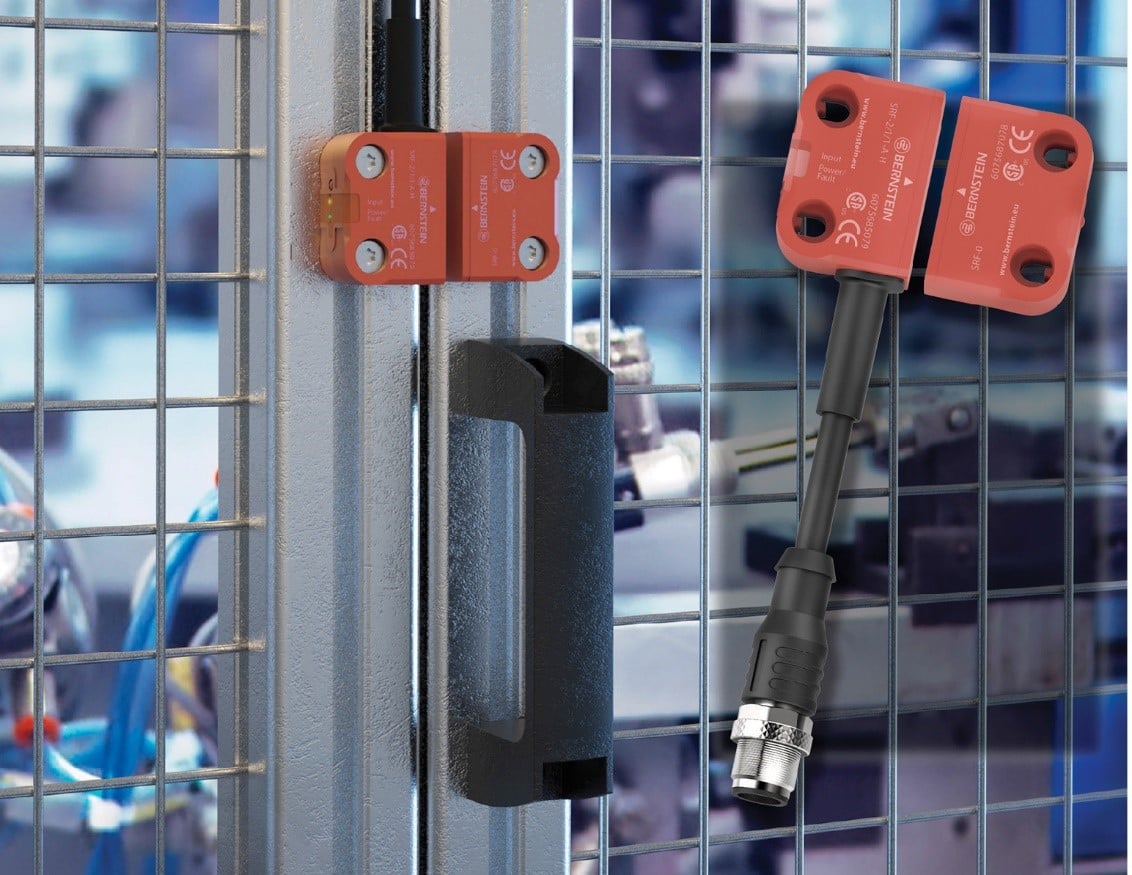 Figure 2. Sensors monitor doors and gates, ensuring personnel are clear of hazardous areas. Source: AltechAltech believes “…getting equipment to integrate on a broader level — through warnings prior to a safety problem — is increasingly important.” The SMART Safety System, compliant to International Standard ISO/TR 24119:2015, prevents fault masking errors in manufacturing machinery or in production processes. In the SMART Safety System, fault masking is prevented using cascading redundant OSSD (output signal switching device) safety outputs (two pulsed 24 V signals) and the incident is recorded via the daisy chain diagnostics (DCD) and communication features.
Ease of installation
Altech Corp’s SMART Safety System design is simplistic, which aids in its installation and quickly provides significant improvements in a manufacturer’s safety program via employee safety and real-time metric data collecting. The design uses M12 pluggable connections with ‘T’ connectors and a terminator cap for the attachment of switches, emergency stop buttons or sensors, following any production process that has identified safety areas or concerns.
The installation is capable of supporting up to 32 switches, buttons and sensors in a series configuration that reduces the amount of cable and wire harnesses. A four-conductor unshielded standard connection cable is used to run from sensor to sensor. The SMART Safety System provides a safety rating of Performance Level (PL)e, Category 4, according to ISO 13849-1:2015 and Safety Integrity Level (SIL) CL3, according to IEC 62061:2005. In essence, it is a remarkably simple plug-in installation process that minimally influences the production process (with little downtime) during implementation.
Predictive maintenance and data collecting
The SMART Safety System is a great tool for predictive maintenance activities such as scheduling, troubleshooting and restarting a defective machine. Planned maintenance schedules can be easily communicated to organizational personnel to ensure that production downtime is minimized, and the production scheduler can adjust production prior to the downtime. In addition, machinery activities can be communicated to applicable personnel, along with the notification of placing a machine back into service.
The DCD and communication feature of the SMART Safety System has the capability to measure nearly unlimited metrics about the safety and production process using an internal bus system monitored via USB 2.0, or near field communications (NFC) or IO-link. This Industry 4.0 design is a plug-in feature with redundant cascading OSSD safety output. The data can be displayed for analysis on a standard USB 2.0 port, PLC, Android smartphone or a tablet using NFC technology. The DCD can also be converted to be read by Profibus using a bridge. This diagnostic system operates completely independent of the safety system outputs. In addition, the IO-link interface uses less wiring, which saves on installation and material costs. The reports and analyses from the DCD can be generated in real-time and are factual (not handwritten and later compiled data) and communicated to applicable personnel to make timely decisions. In addition, the DCD feature is capable of generating historical data for trend reports.
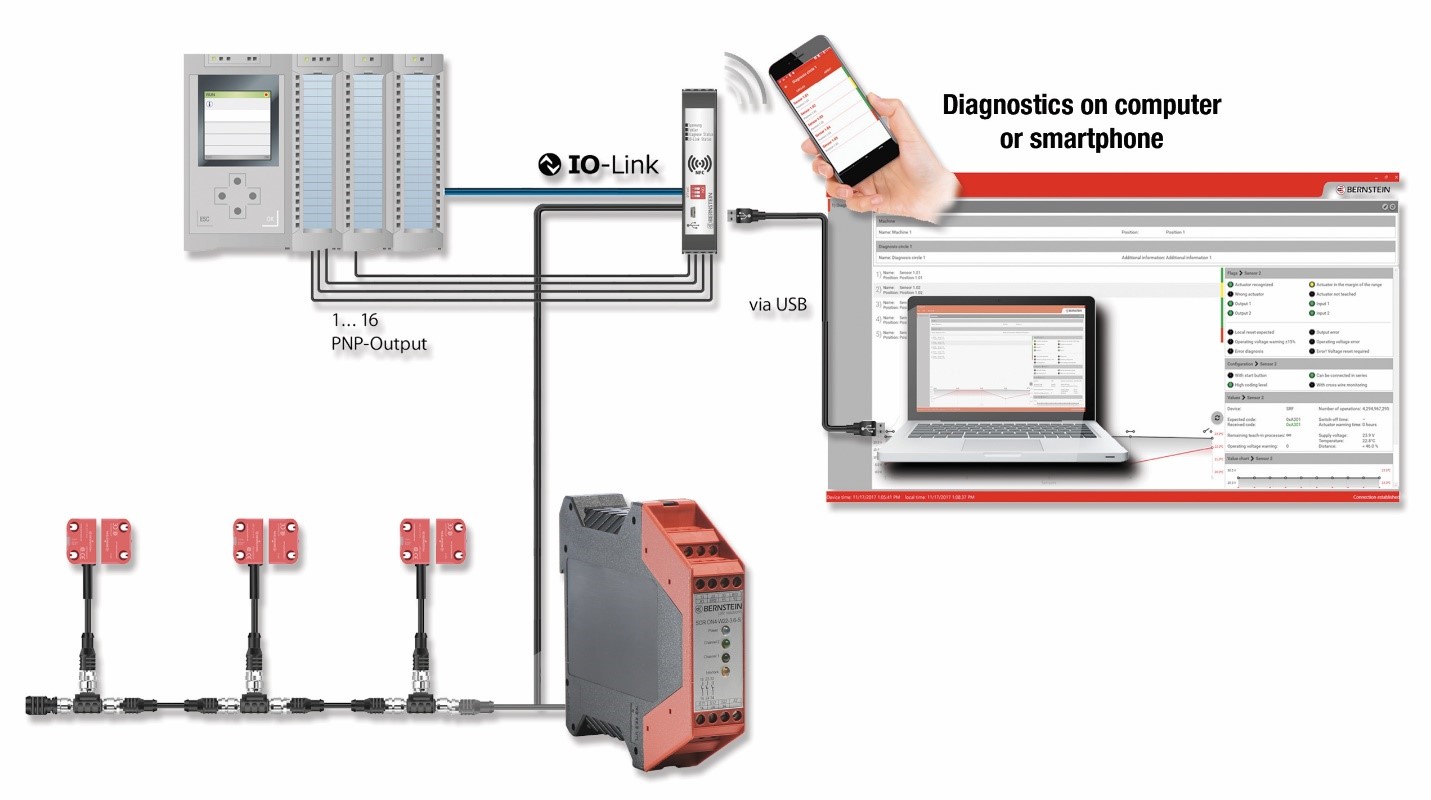 Figure 3. The SMART Safety System quickly and easily provides complete equipment visibility. Source: Altech
Documenting a manufacturer’s safety program is challenging, time consuming and associated with manual errors. The SMART Safety System removes most manual assessments and the DCD provides real-time data to support compliance requirements. Also, reports can be compiled for annual quality and safety management system reviews that are needed to show applicable company compliance to federal, state and local required regulations. The DCD reports can be used as a supplement for internal continuous improvement initiatives. By integrating data collection, manufacturers can automate the process and free up personnel to focus on other tasks, while reducing employee injuries and improving employee safety.
Employee safety
Today’s manufacturing environment is in the midst of the Industry 4.0 movement and the workforce is evolving. A safe work environment is being demanded by employees and new technologies are being developed to address the need for safety. The Altech Corp SMART Safety System is an example. As older experienced employees are retiring, they are being replaced with younger workers who are less experienced, tend to be more prone to injury and have different work behaviors or attitudes. Poorly designed safety systems and procedural deficiencies and failures are symptoms driving the Industry 4.0 movement that includes a manufacturer’s safety program.
By connecting employees, equipment and the production process, the SMART Safety System creates new opportunities to improve employee safety through remote access, process visibility, employee location and real-time data. The SMART Safety System diagnostics and communication features can be combined to understand the frequency, duration, time and location of safety-related shutdowns that cause production downtime, which makes a manufacturer less efficient in meeting output and safety expectations. With the Smart Safety System, employees can feel confident in their workplace well-being and become comfortable operating machinery associated with their job requirements.
Conclusion
In summary, the Altech SMART Safety System prevents employee injuries, offering a solution to fault masking. As the Industry 4.0 movement continues to influence companies, it is necessary to improve the efficiency of a company’s current safety program. As detailed above, there are many benefits to installing a SMART Safety System, including reduction in manufacturing fault masking, ease of installation, improved predictive maintenance and data collecting, and improved employee safety.
For more information on Altech’s SMART Safety System, visit their website.