Wheatgrass engineered for human consumption released for public use for the first time
Siobhan Treacy | June 25, 2020Researchers from the University of Minnesota and the Land Institute have released the first food-grade wheatgrass variety for public use.
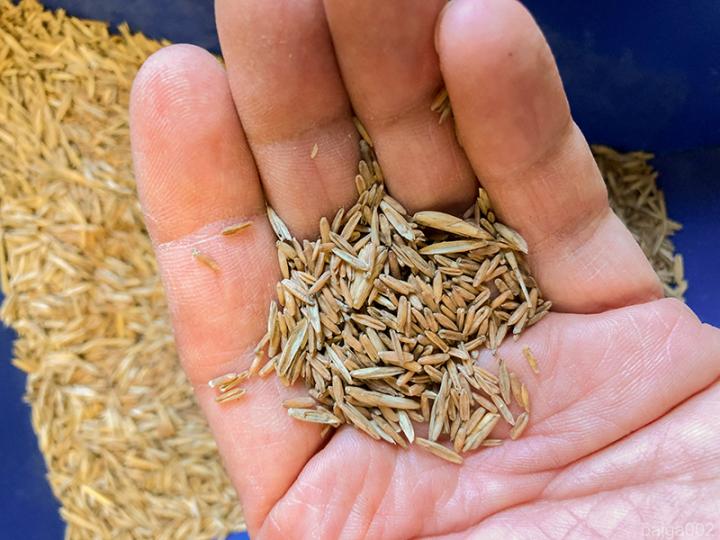 MN-Clearwater wheatgrass seed, whose grain threshes freely from the hulls 63% of the time. Source:
Wheatgrass is typically used in animal feed because it is packed with nutrients. It is also an eco-friendly and cost-effective crop. This is the first time a wheatgrass variety has been engineered and released for human consumption.
The new wheatgrass is named MN-Clearwater. It was produced by crossing seven wheatgrass parents with desired qualities, like high grain yield or seed size. The successful domestication of wheatgrass has benefits for the environment and farmers.
Wheatgrass is a perennial plant. This means it is a soil builder and provides soil cover throughout the year. Soil coverage prevents soil and nutrient runoff during heavy rainfall. The deep, dense roots of these plants capture nutrients before they get into the groundwater, protecting the groundwater based systems from contamination.
MN-Clearwater has many benefits, including less soil loss, fewer fertilizers entering the groundwater and improved carbon storage. Because it is a perennial, wheatgrass requires less fertilizer and machinery than annual crops and only needs to be planted once every three years. Farmers can gather multiple harvests off of one crop.
There are benefits for food processors and consumers as well. Wheatgrass adds new flavor and nutritional properties to the food market, which is enticing for consumers and profitable for food processors.
Harvested wheatgrass goes with wheat-based products. It can be used as a wheat replacement, but it is best when mixed with wheat. In wheat- or wheatgrass-based products baking and functional properties of traditional wheat products are maintained with new flavors. The first registered food product with wheatgrass was a beer made by Patagonia Provisions.
A paper on this research was published in the Journal of Plant Registration.