Empowering power for the digital age
June 09, 2020Traditional industrial power supplies are ill-equipped to meet the demands of the digital age. While they were once an integral component of industrial automation systems and poised to evolve along with them, they did their jobs so well that the need for innovation was overlooked.
As commoditization set in, cost containment became the prime directive for technology advancement. While the automation systems they powered advanced in intelligence, diagnostics, robustness, communications and advanced redundancy, customer-focused power supply innovation slowed. When uninterruptible power supply (UPS) products were added to the mix, they were separate, bolt-on additions, delivering limited functionality via lead-acid battery cells.
Power supplies do not deserve the low level of attention that the history of industrial automation has paid them. No matter how advanced and capable the automation system, it is useless without a reliable power source. But today, that reliable operation is subject to an increasingly wide variety of threats. The power supplies for today’s automation systems must be significantly more intelligent, robust and secure than any power component in widespread use today. And this is true for backplane plug-in modules, standalone systems and UPSs alike.
Power should be smart
The first thing lacking in conventional power supplies is intelligence. Do not assume that power components do not need computing power. Combine an industrial power supply and UPS with a fast 32-bit ARM™ cyber-secure microcontroller with high memory capacity and amazing things can happen. Align intermediate, channel and output voltages, currents, power factors, board and component temperatures and many other variables can be sensed and monitored.
Individual backplane slots can be dynamically optimized for efficiency and on/off controlled for safety. This enables dynamic load sharing, advanced redundancy and situational awareness. While a typical modern automation power supply or UPS generates little to no diagnostics, an intelligent power supply can provide wider-ranging diagnostics, including time, temperature, voltage, current, error, charge, capacity, status and much more.
Power should be cyber secure
Power supplies are a vulnerability for hackers. A cyberattack can disrupt operations, totally or at key process points. Power must have the same embedded root-of-trust technologies as all other cyber security system elements. This includes secure processors with encryption, authentication, component anti-tamper and secure communications. Industrial power modules must also be constructed of all-metal, anti-tamper housings. Securing power is essential for true ICS cyber security.
Power should be robust
As companies turn to remote operations to reduce costs, power supplies must be better equipped to handle exposure to environmental extremes. In addition to being subject to vibration, humidity, contaminants, extreme temperatures and other stresses, industrial power components themselves generate high heat, which is further amplified when used in hot places.
To combat thermal challenges, conventional power supply designers host them in vented enclosures with or without fans. When fans are used, they are often the first point of failure, which impacts long-term reliability, by subjecting them to dust, lint and particulate coatings. Such contaminants then act as thermal insulators and electrical conductors, absorbing moisture and corrosive vapors that further stress the components.
Counter-intuitively, the best way to protect power supplies from ambient contamination and stress is to remove all the venting and replace it with advanced thermo and electromechanical designs for component placement, thermal bonding and contiguous thermal conduction. The casing should be hermetically sealed metal compliant with NEMA4X standards. This enables safer encapsulation of onboard electronics and anti-tamper protection, which should comply with FIPS140-2 anti-tamper standards.
An all-metal casing also enables protection from electromagnetic pulse (EMP). Any power supply being deployed today should conform to Military Standard 461 (MIL-STD-461E) and International Electrical Commission 61000 (IEC 61000) for EMP resistance.
 Figure 1: Plug-in power modules, standalone towers and standalone UPS from Bedrock. Source: Bedrock
Power should be simple
One system power supply, one standalone power supply and one UPS is all that would be needed. The power module can be coupled to the system backplane. A standalone power supply can supplement the backplane module or work with any existing industrial power automation systems and connect to any Ethernet network. Both power supplies would then work seamlessly with field-mounted lithium-ion (li-ion) polymer-based UPS.
Power at the edge matters
As control automation extends from the control room to the edge, power must go with it. This includes providing individual channel power components, regulation and over 1,000 V of galvanic isolation CTC and CTG. Every field sensor and actuator should be powered by single, dual or triple I/O channels with power paths that can be independently traced up to the site mains and UPS.
Batteries need protection too
UPS can benefit from all intelligence, security and robustness as a plug-in module or standalone options and are dependent on batteries that must be protected as well. Where lead-acid batteries once dominated, li-ion is fast becoming the battery of choice for modern UPS, for at least the following reasons: li-ion batteries are sealed and can be mounted in any orientation; they have a wider temperature range than lead-acid and will deliver 80% or more of its capacity from -20° C to 40° C, while the performance of a lead-acid battery de-rates rapidly. At -20° C, lead-acid delivers only ~30% of its rated capacity; they fast-charge to 100% much quicker than absorbent glass mat (AGM) batteries and charge at nearly 100% efficiency; they have a superior useable capacity and extended cycle life over AGM; and they can be up to five times lighter and three times lower volume than AGM for equivalent energy capacity and cycle life.
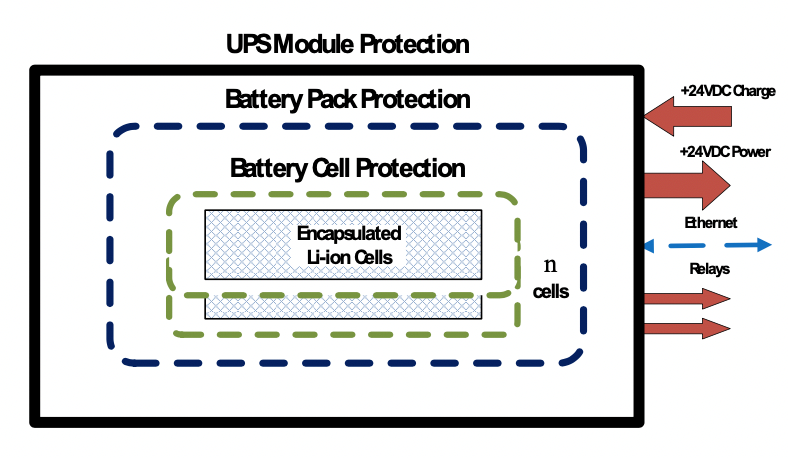 Figure 2: Comparison of capacity retention versus cycles for li-ion. Source: Bedrock
Like automation systems themselves, battery cells must have multiple layers of protection.
Batteries consist of multiple cells, depending on how much power is needed. Rather than stack cells and monitor, control and contain that stack, advanced li-ion battery safety requires every cell to be engineered as an independent system. This starts with galvanic isolation of charging circuits and dedicated circuit boards, sensors, electronics and passives to monitor, control and limit charging current, charging voltage and discharge current.
In this way, the battery pack becomes less vulnerable to the status of a single cell and the charge and discharge of each cell is independently optimized for safety and performance. The cells should be encapsulated and protected by multiple layers as shown above, including compliance with NEMA4x, FIPS 140 and IP protection from an all-metal housing as discussed above.
Are power supplies ready for tomorrow?
How ready are the backplane plug-in, standalone and UPSs ready for what is next? This checklist includes the attributes necessary for power integrity in the digital age:
- Secure, embedded microcontrollers, 32 bit or more
- Advanced cyber security built into the electronics
- Physical, electrical and logical coupling
- Ethernet communications
- Advanced, integrated redundancy
- High-level system integration capability without depending on external components, including a universal secure power module for AC/DC, DC/DC and a universal UPS
- Multiple soft programmable dry contacts via BMI and Ethernet on UPS and standalone SPS
- Advanced real-time, multivariable diagnostics, including capacity, remaining time, temperature, voltage, current, max error and charge state
- Integrated and advanced serial over Ethernet (SoE) connectivity
- OPC UA server enabled secure power module (SPM) through controller and through server embedded in the power supply
- Sealed all-metal construction, FIPS140 compliant, IP67 and NEMA4X rated for SPS and UPS
- Battery back-up using sealed li-ion polymer gel
Back to the future
Power has always been a key enabler of industrial connectivity and productivity, and now, as Moore’s law drives software and communication standards to a new level of industrial efficiency, cyber threat vectors come with it, and power must be up to both the performance and security task. Power needs to be as smart as the technology it enables and smarter than anyone trying to disable it. Industrial power delivers on the promise of the industrial internet of things (IIoT) and should be viewed as a cornerstone of automation, not an afterthought.
For more information about Bedrock Automation, visit BedrockAutomation.com.