Study fingers pharma as a prime water polluter
S. Himmelstein | March 27, 2020Pharmaceutical residues discharged to municipal wastewater treatment plants from drug manufacturing 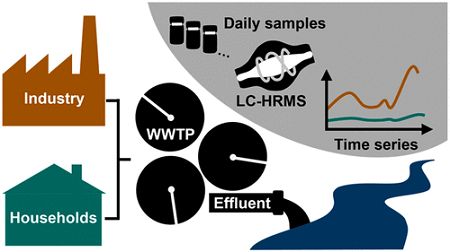 Daily composite samples were collected for three months at two wastewater treatment plants. Source: Sabine Anliker et al.facilities and residences can contaminate rivers and other waterways that receive treatment plant effluents. The contributions of these sources to the pharmaceutical compound load detected in the Rhine River were examined by researchers from Switzerland’s Federal Institute of Aquatic Science and Technology.
Daily composite samples collected for three months at two wastewater treatment plants were analyzed by liquid chromatography high-resolution mass spectrometry. One treatment facility processed only domestic wastewater from homes and small businesses, and the other processed domestic and pharmaceutical manufacturing wastewater.
Meanwhile, 10 times as many potential industrial emissions were detected at the site receiving pharma effluents relative to that receiving purely domestic wastewater. Samples from the former site also contained 25 compounds as pharmaceutical industry-related substances, and peak levels exceeded those in samples from the domestic wastewater treatment facility. Some of the compounds of interest were detected more than 60 miles downstream in the river, pointing to pharmaceutical production as a major water pollutant emission source.