Algorithm enables driverless cars to avoid bottlenecks, collisions
Marie Donlon | February 25, 2020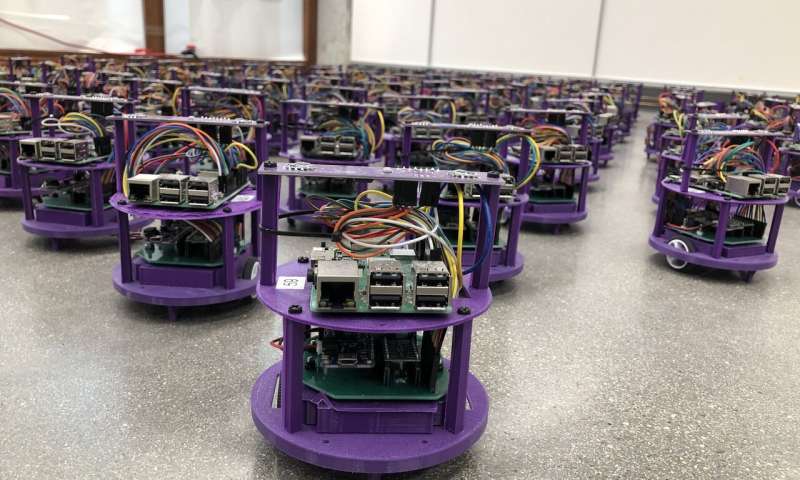 Source: Northwestern UniversityResearchers from Northwestern University have created a decentralized algorithm to enable autonomous vehicles to avoid traffic jams and collisions.
To develop the algorithm, researchers worked with robots in the lab, both real and simulated, teaching them to join together to achieve predetermined shapes in under a minute. To do this, the researchers shifted the focus away from a centralized system — where one robot controls a swarm of robots and if that robot fails the entire fleet fails — to a decentralized system — where robots within the swarm work independently to make decisions to accomplish a task, in this case, forming a predetermined shape.
Using GPS-like technology, the robots were able to coordinate with the other robots by being able to visualize their position on a simulated grid. The robots were able to use sensors to communicate with neighboring robots to distinguish occupied from unoccupied spaces on the grid. This information enabled the robots to coordinate with their immediate neighbors to determine whether or not a spot on the grid was occupied before occupying the spot themselves, thereby ensuring collision avoidance and preventing traffic bottlenecks
In addition to improving the safety of future driverless vehicles, the developers believe that the algorithm could improve the safety of driverless fleets as well as traffic within automated warehouses.
The research appears in the journal IEEE Transactions on Robotics.
To see how the swarm of robots operated, watch the accompanying video that appears courtesy of Northwestern University.