Researchers develop safe method for breaking down printed circuit boards
Marie Donlon | January 16, 2020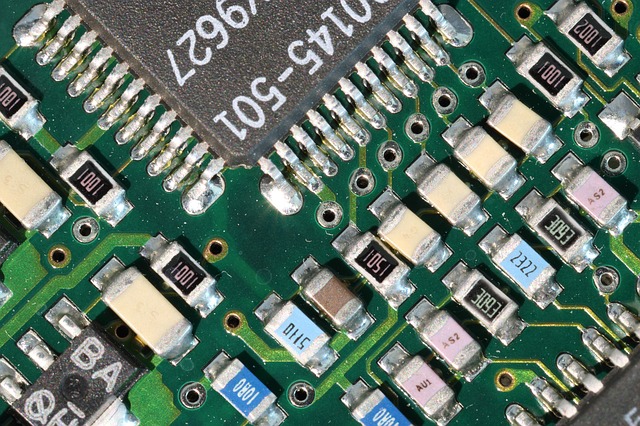 Researchers from China’s Sun Yat-sen University have developed a technique for breaking down the dangerous compounds from discarded printed circuit boards using a ball mill.
Researchers pulverized a printed circuit board, which is a critical component to the functioning of virtually all electronic devices, supporting and connecting their electrical components. Printed circuit boards are typically composed of 30% recoverable metal particulates and 70% non-metal particulates, which are not recoverable. The team separated the metal components from non-metal components and recovered the metal particulates through a process of magnetic and high-voltage electrostatic separations.
Following the separation process, leftover non-metal particulates, like resins, brominated flame retardants, reinforcing materials and other additives cannot be burned, landfilled or otherwise discarded due to their potential impact on the environment. Researchers focused specifically on brominated flame retardants, which are added to printed circuit boards to prevent them from igniting, but they have also been linked to fetal tissue damage and endocrine disorders.
To make the leftover non-metal particulates safe for disposal, researchers placed the non-metal particulates in a ball mill, which is a rotating machine that grinds material using agate balls. Once ground, researchers added an iron powder to the mixture, which removes halogens, like bromine, from organic compounds. Researchers determined that the ball milling process reduced the presence of bromine by 50%.
The findings appear in the journal ACS Sustainable Chemistry & Engineering.