
Autonomous drone can distinguish the living from the dead
Marie Donlon | October 23, 2019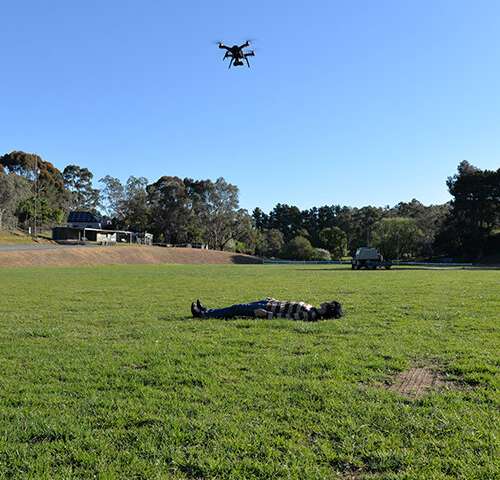 Source: University of South Australia A team of engineers from the University of South Australia and Middle Technical University in Baghdad has developed a computer vision system that is capable of distinguishing survivors from the deceased following a disaster scenario from as far away as 26 ft.
The autonomous drone cameras equipped with the new computer vision system can detect the shallow movements of a subject’s chest cavity, suggesting evidence of breathing and a heartbeat. This can be accomplished from roughly 13 to 26 ft away, according to the team. All that needs to be done to enable this, according to researchers, is for the subject’s upper torso to be visible so that the cameras can detect the movements.
To demonstrate how the technology works, the team tested the system on eight volunteers and a mannequin. Amid low wind conditions, the cameras filmed the subjects from as far as approximately 26 ft away for one minute each. In every instance, the camera successfully distinguished the living subjects from the mannequin.
Calling the technology more accurate than other similar survivor detection systems currently available that measure changes in skin pallor and body temperature, the team believes the system could potentially be used by first responders. In the event of a scenario such as an earthquake, flood, nuclear disaster, bio attack, chemical explosion, mass shooting and search and rescue following a plane crash, the drones could be deployed to locate survivors in need of aid.
Yet before that happens, researchers believe that the system needs to undergo additional testing, including in scenarios with challenging weather conditions.
The team published their research in the journal Remote Sensing.


Excellent. Killer drones won't waste bullets on corpses.
A bigger challenge is to identify the ambulatory dead (zombies) from the living
Seriously, it's a move in the right direction but making a judgment on just shallow breathing seems like it would be likely to miss potential survivors. I expect the end product will need to check more signs and do some triage.
In reply to #2
You could remote taze them and see if they twitch.