Airborne pathogens no match for graphene filter
S. Himmelstein | October 09, 2019Graphene forms the basis of a new tool engineered to combat hospital-acquired infections caused by airborne  Self-sterilizing laser-induced graphene air filters trap airborne pathogens and eliminate them through Joule heating of the conductive material. Source: Tour Group/Rice Universitypathogens. A self-cleaning air filter composed of laser-induced graphene captures bacteria, fungi and other biological contaminants carried by particulates and aerosols and inactivates them with heat.
Rice University researchers used an industrial laser cutter to heat the surface of polyimide sheets, resulting in the formation of electrically conductive graphene foam fibers. Filter temperatures exceed 300° C by a periodic Joule-heating mechanism that destroys any disease-causing microorganism.
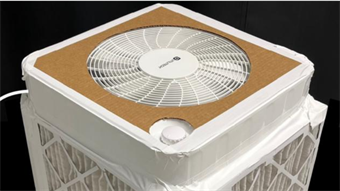
The graphene-equipped filters were tested with a commercial vacuum filtration system. During 90 hours of operation and an air treatment rate of 10 liters per minute, all pathogens and byproducts captured by the filters were deactivated by Joule heating. Bacterial growth resumed after an additional 130 hours of incubation on non-heated laser-induced graphene filters, while heated filters maintained their sanitary status.
A single graphene-based filter could be efficient enough to replace the two filter beds now mandated by U.S. federal standards for hospital ventilation systems.