Researchers extract valuable metals from plants
Marie Donlon | July 16, 2019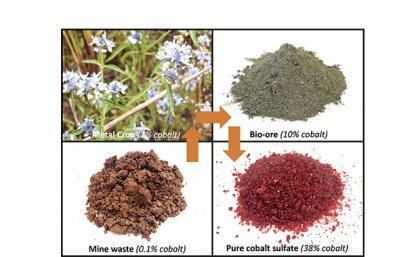 Source: University of QueenslandResearchers from the University of Queensland, Australia, are recovering valuable metals from mining waste using plants native to Australia that possess metal absorbing capabilities.
The process, called phytomining, harvests metal from the living tissue of plants called hyperaccumulators. Hyperaccumulators hold metals in high concentrations once the plants have absorbed the metals through their roots. Researchers propose planting the hyperaccumulators in mining waste and eventually burning the plants and extracting the metal from the ash residue.
According to researchers, collecting waste through phytomining results in additional revenue streams, offering sustainable solutions to the issue that the mining industry faces with the scarcity of valuable metals. For instance, cobalt consumption is expected to increase by 8-10% annually. However, because supplies of cobalt will likely be limited by 2050, the industry needs to locate other sources of it. Phytomining presents one solution, according to researchers, as some hyperaccumulators can hold up to 1% of cobalt or 4% of nickel in their shoots. This amounts to over 25% metal in their ash, which is called “bio-ore.”
Such high purity biosourced metal is reportedly ideal for the electrochemical industry, particularly for the manufacture of rechargeable batteries.
"Australia is one of the world's leading mineral resources nations with a number of mines around the country generating large quantities of processed mining wastes," said University of Queensland's Sustainable Minerals Institute (SMI) researcher Dr. Philip Nkrumah, who has been working on the phytomining technology at the Centre for Mined Land Rehabilitation. "These wastes, often stored in tailings facilities, contain valuable metals including cobalt, and represent some of the largest untapped resources globally."
Metal is necessary in just about every industry imaginable from construction to transportation. Yet, with resources for some valuable metals limited, either by scarcity or by inefficient recovery processes, coupled with growing piles of waste material, phytomining could prove to be a cost-effective method for extracting valuable metals, according to the research team.