Offline programming software for robotic welding
Shawn Martin | July 18, 2019There are numerous challenges that must be addressed to realize the true benefits of a robotic welding machine. As with all welding processes, in-house welding expertise is invaluable when diagnosing weld deficiencies and fine-tuning robot weld settings. However, the second hurdle, how to maximize uptime, is at odds with traditional programming methods, and offline programming software is quickly gaining praise as a preferred solution.
Delays with teach pendants
Robotic welding is a highly automated process, but using a robotic welding machine like a five-axis milling machine or a 3D printer is currently impossible. Welding tasks must be programmed, numerous control points need to be established and trajectories must be mapped to ensure tool-damaging collisions are avoided.
The traditional method of programming a robotic welding arm is through the use of a teach pendant. The robot operational mode is switched to manual mode and the arm is manually positioned to control points that can be recorded via a teach pendant.
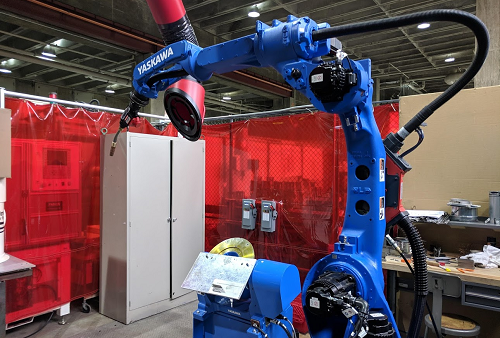 Figure 1: Amid a skills gap and labor shortage, offline programming allows machine shops to gain a competitive advantage. Source: Shawn Martin / Engineering360
Operators must also use a programming language to define the appropriate coordinate frame, direction of movement and speed. This allows the robot to establish reference points with its position and orientation relative to a home position, and ensures that the robot’s trajectory is kept on a clear pathway.
The downside of programming with teach pendants is that the machine is forced offline whenever new tasks are being introduced, limiting productivity. The trajectory path is also limited by the number of control points that can be recorded by the teach pendant. Although teach pendant programming is widely used in industry, it is best reserved for highly repetitive, simple tasks.
Offline programming reduces downtime and improves efficiency
Offline programming software allows operators to program trajectory paths and welding parameters in a virtual space. This greatly reduces downtime as the robotic arm remains online, completing predefined functions while new trajectories and welding parameters are established.
Offline programming does, however, have a few prerequisites that must be met. To create a virtual space, offline programming software requires 3D CAD models of parts, fixtures and tooling. The models are typically created through a CAD program, such as SolidWorks. The offline software suite is also developed to interface with a specific robot and is supplied with proprietary 3D CAD models of that brand of robots.
Once a model of the shop floor has been replicated, offline programming of the robot is performed through a graphical interface. In this virtual environment, the entire trajectory and welding sequences are established by the software program. Most offline software programs also include a simulation feature that is useful in identifying possible collisions, areas where weld procedure angles could be difficult to achieve, the estimated cycle time and the amount of consumable required to complete the job. This gives the user a chance to modify the program once more while the robot is still free to complete pre-defined functions and establishes an accurate quote when bidding for new jobs.
Before a robot begins a production cycle, a teach pendant is still required to establish control points where a high degree of precision is required. To accomplish this, the program is exported to the robot and control points are calibrated, which typically includes the home position, fixtures, weld points and the wire cutter.
Conclusion
Offline programming and simulation software reduces programming time, decreases robotic cell downtime and improves quote accuracy. Amid a skills gap and labor shortage, offline programming allows machine shops to gain a competitive advantage. Operators can decrease costs when performing value-added manufacturing and part diversification, or when joining large parts with many welds. It also allows operators to remain competitive when bidding for new jobs or performing lower volume production runs when compared to teach pendant programming.