
Sugar 'shells' could inspire indestructible clothing and materials
Marie Donlon | July 01, 2019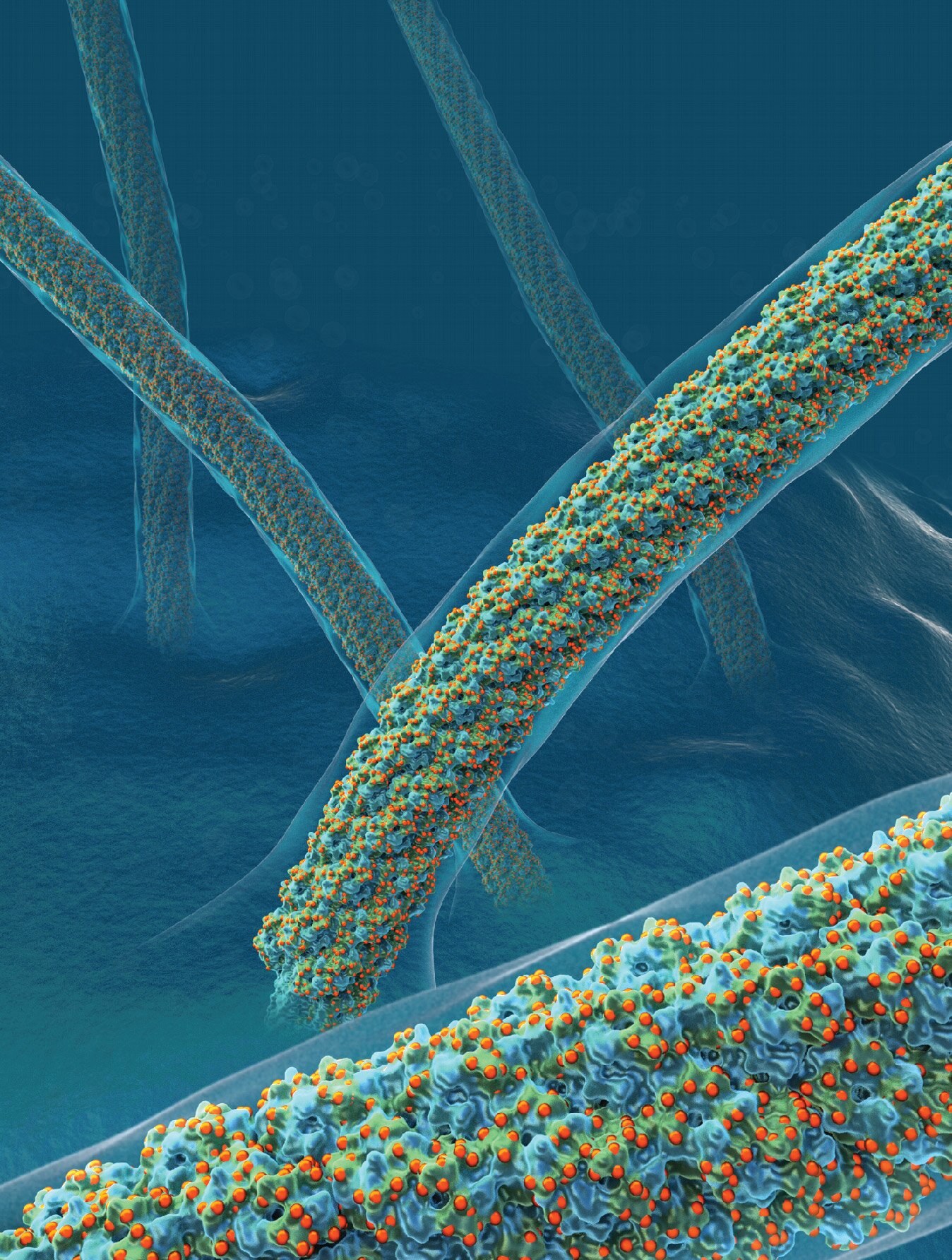 The natural "armor," made of sugar, that shocked scientists with its durability, surviving even a bath in boiling lye. Source: Edward H. Egelman, UVA School of MedicineBased on a discovery by scientists at the University of Virginia (UVA) School of Medicine, sugars may one day be used to make indestructible clothing and other everyday materials.
UVA scientists discovered that certain acidic hot springs, including volcanic hot springs, are home to ancient single-cell organisms called Sulfolobus islandicus that withstand extreme environments, even conditions unsuitable for most other lifeforms.
The organisms are covered in tiny appendages called pili, which UVA scientists attempted to break apart. However, the team could not penetrate the pili, even when they submerged it in a boiling detergent. The team also boiled the pili in sodium hydroxide, but could not break the pili.
Eventually, the team turned to cryo-electron microscopy, which imaged submicroscopic objects nearly down to individual atoms. What the team discovered was that the entire surface of the filaments was encrusted with a layer of sugar. The organisms coat each of its filaments in the sugar, making them resistant to the environmental extremes of their habitats.
Likening it to the hard shell of a candy apple, researchers discovered that the exterior of each filament is harder that underlying substrates and the sugars are arranged so that acid cannot dissolve it.
"These pili, which are protein filaments, normally would be very sensitive to heat, acid and enzymes, but coating it in sugars make it almost indestructible," explained Edward H. Egelman, Ph.D., of UVA's Department of Biochemistry and Molecular Genetics.
"There's a lot of evidence showing that adding small numbers of sugars can increase the stability of drugs and other protein structures, but no one, as far as we know, has ever seen this massive amount ... to the point where something is almost indestructible."
According to the team, coating proteins like wool in specially arranged sugars could potentially result in durable clothing, carpeting and building materials, for instance.
The research is published in Nature Microbiology.

Looking forward to lots of great very interesting reading
Website Motix sets goals to offer personalized assistance in an ever-changing sector, guiding customers with new and appropriate proposals and offers them multiple digital solutions to maximize their efficiency. Logo Designers In London