US Army examines how smart cities could help in urban operations
Peter Brown | May 18, 2019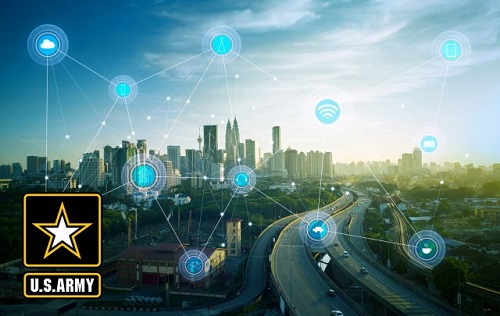 The Army could use commercial and government IoT devices to better fight urban battles. Source: Army Research LaboratoryThe U.S. Army is investigating how developing systems for smart cities of the future used for civilian and government applications could complement the capabilities of military assets in urban operations.
Through the Army Research Laboratory (ARL), the Army is examining how smart city applications, which have emerged from the internet of things (IoT) where multiple devices connect to the internet, could be used as part of the modernization efforts of the military in delivering a network that guarantees the Army can prepare for battle in any condition or location.
The so-called internet of battlefield things (IoBT) would allow the Army to expand the knowledge of potential enemies using commercial IoT systems through a collection of communication protocols to facilitate data based on geographic coverage. The ARL focused on one communication protocol known as Long Range Wide Area Network (LoRaWAN), a low power standard that has the ability to transmit data over long ranges within IoT infrastructures. LoRaWAN has demonstrated the ability to transmit to an IoT device beyond 10 kilometers.
ARL used vehicle-mounted IoT transmitters to conduct tests of LoRaWAN coverage in Montreal. Researchers found that the maximum transmission distance across Montreal’s central business district could reliably be established 5 kilometers from the receiver. The distance was achieved for three separate LoRaWAN data transmission rates in the North American industrial, scientific and medical 915 MHz band.
Researchers applied a combination of ARL-developed IoT architecture and a collection of commercially available hardware and software to support situational awareness and decision support capabilities in tactical operations centers.
From the data garnered, ARL will test two additional areas of research: coverage gap analysis, where LoRaWAN coverage may be obstructed; and data rate coverage, the speed at which the data can travel on LoRaWAN.