Diesel-degrading bacteria found in pristine Antarctic soils
S. Himmelstein | March 14, 2019Two strains of diesel-degrading bacteria have been identified in soils from a pristine area of Antarctica. While bacteria isolated from hydrocarbon-contaminated sites on the continent were documented in past research to use hydrocarbon components as energy sources, similar observations have been few in untainted sites. The recent findings by Malaysian researchers could inform bioremediation efforts in polar regions.
The researchers collected soil samples in Scott Coast and Ross Island and used bacterial ribosomal DNA 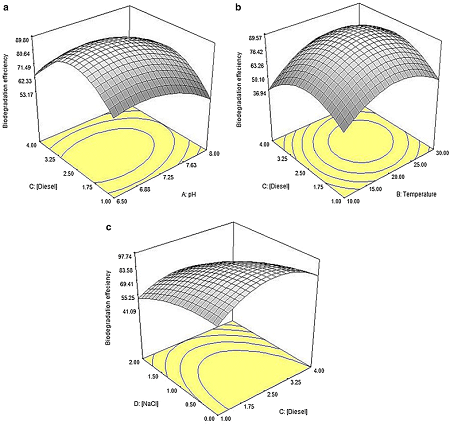 3D response surface plots show the interaction between diesel concentration and pH (a) temperature (b) and salt concentration (c) affecting n-dodecane mineralization (%) by strain ADL36. Source: S. Habib et al.sequences to identify two bacterial strains: ADL15 and ADL36. The conditions required to maximize the bacteria’s ability to consume diesel was then determined with the response surface methodology (RSM), which simultaneously measures multiple factors and their combined effects.
Both strains exhibited similar optimal growth conditions, which include a non-acidic, neutral soil and a salt concentration of 1.0%. Strain ADL36 was observed to withstand a higher concentration of diesel than strain ADL15, and an optimal temperature of 20° C was documented for both.
Optimal conditions improved the ability of ADL15 to degrade diesel in a test environment from 22.39% to 38.32%, and of ADL36 from 83.75% to 99.89%. While strain ADL36 was more effective in biodegrading diesel, both strains were able to adapt to a wide range of temperatures, so could be deployed during summertime when temperatures are higher, soils are unfrozen and water is more accessible.
The Antarctic Treaty prohibits the use of non-Antarctic organisms in the region, creating high demand for indigenous organisms that can clean up polluted soil. The researchers next plan to conduct a microbial consortium study to investigate how the use of both bacterial strains could improve cleanup of hydrocarbon pollutants from polar soils.
Scientists from Universiti Putra Malaysia and University of Malaya contributed to this study, which is published in Microbial CellFactories.