Upcycled PET could help eliminate single-use plastic waste, according to NREL
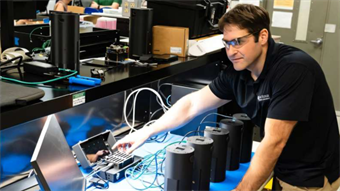
Amy J. Born | February 27, 2019 NREL Senior Research Fellow Gregg Beckham and Materials Scientist Nic Rorrer are working on a process of upcycling: breaking down PET in existing waste and combining it with compounds derived from biomass to make something more valuable, such as fiber-reinforced composite materials. Source: Dennis Schroeder / NRELResearchers at the U.S. Department of Energy's National Renewable Energy Laboratory (NREL) have found a way to turn polyethylene terephthalate (PET) plastic into a more valuable plastic, thereby creating an economic incentive to eliminate waste and address the world's plastics pollution problem.
PET is used to make single-use beverage bottles. According to NREL senior research fellow Gregg Beckham, a primary author of the paper on this research, only 30% of these bottles are recycled in the United States. Beckham attributes this to a very low financial incentive.
The NREL team chemically combined reclaimed PET from bottles with bio-based compounds. The result is higher-value fiber-reinforced plastics (FRPs) that can be used in a range of products, including snowboards, vehicle parts and wind turbines, more than doubling the value of the composites, according to the press release. In addition, the FRPs have twice the strength and greater adhesion to fiberglass than the standard petroleum-derived FRP.
NREL's supply-chain analysis of its new FRP showed that this process also used less energy and emitted fewer greenhouse gases than production of petroleum-based composites.
This research, published in Joule, has the potential to boost worldwide efforts to turn single-use plastic waste into long-lasting performance materials through sustainable methods, NREL said.