The case for siting PV Systems on snow-covered mountains
S. Himmelstein | January 16, 2019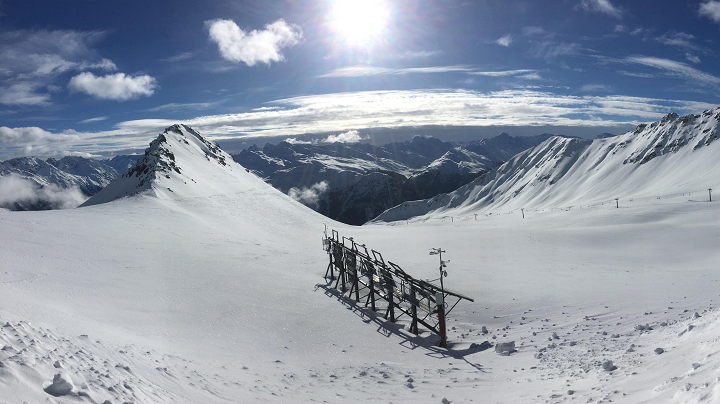 An experimental PV system near Davos, Switzerland. Source: EPFL/Laboratory of Cryospheric Sciences
The five nuclear power plants in Switzerland have a limited service life, as the country plans to phase out this generation source in the near term. The Energy Strategy 2050 policy will increase power derived from solar, wind, biomass and geothermal sources to at least 11,400 GWh by 2035 from the current 2,831 GWh.
Expanding solar energy as a reliable source of electricity during winter may be problematic - shorter daylight hours and reduced solar radiation will result in a power supply shortfall. As counterintuitive as it may seem, this shortfall might be addressed by installing photovoltaic (PV) systems in high Alpine regions.
Researchers from École Polytechnique Fédérale de Lausanne (EPFL) assessed the potential of three choices for PV installations that increase production during winter months when electricity is most needed. These are placements that favor high winter irradiance, high ground-reflected radiation and steeper-than-usual panel tilt angles. PV systems installed in high Alpine regions were determined to offer a means of reducing the seasonal supply shortfall in wintertime because the amount of solar radiation in winter is greater there than on the Swiss plateau, which is often impacted by fog.
Snow cover in mountainous areas benefits PV system output as the reflected radiation is harnessed by steeply angled solar panels. Alpine installations could help shift electricity production from summer to winter without reducing the annual total production. Such systems would require significantly less surface area and PV installations in urban environments on the Swiss plateau. With optimal panel tilt angles, up to 50% of the winter deficit in electricity production can be mediated by PV generation.