Projects Advance to Modernize Chicago's Transit
David Wagman | December 13, 2018The Chicago Transit Authority selected a contracting team to design and build the first phase of a project to rebuild century-old rail lines on its Red and Purple routes.
The agency also announced that its plan to extend the Red Line south from 95th Street to 130th Street will be advanced by hiring a program manager to oversee environmental and preliminary engineering work ahead of seeking funding for the project.
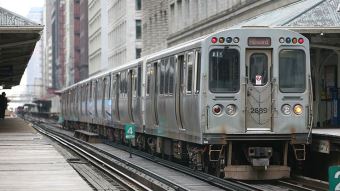 Chicago's Red Line is its busiest rail line, carrying 30% of the trans system's riders. Source: Daniel Schwen / CC BY-SA 4.0Both projects are part of a series of projects to improve the 22-mile Red Line, the CTA’s busiest line, which carries more than 30% of rail riders.
Phase One Contract Award
CTA approved a $1.2 billion contract to The Walsh-Fluor Design Build Team which will engineer, design and build Phase One of the Red and Purple line modernization. The team will be responsible for building new Red and Purple line track infrastructure, including:
- Reconstructing the Lawrence, Argyle, Berwyn and Bryn Mawr Red Line stations into larger, fully accessible stations and track structure, totaling six miles that is nearly a century old.
- Building a rail bypass north of Belmont station that will improve service reliability on the Red, Purple and Brown lines, increasing train speeds, easing overcrowding on rail cars and providing capacity for projected future growth.
- Installing a new signal system on 23 miles of track between Howard and Belmont that is intended to improve CTA train flow and increase service reliability.
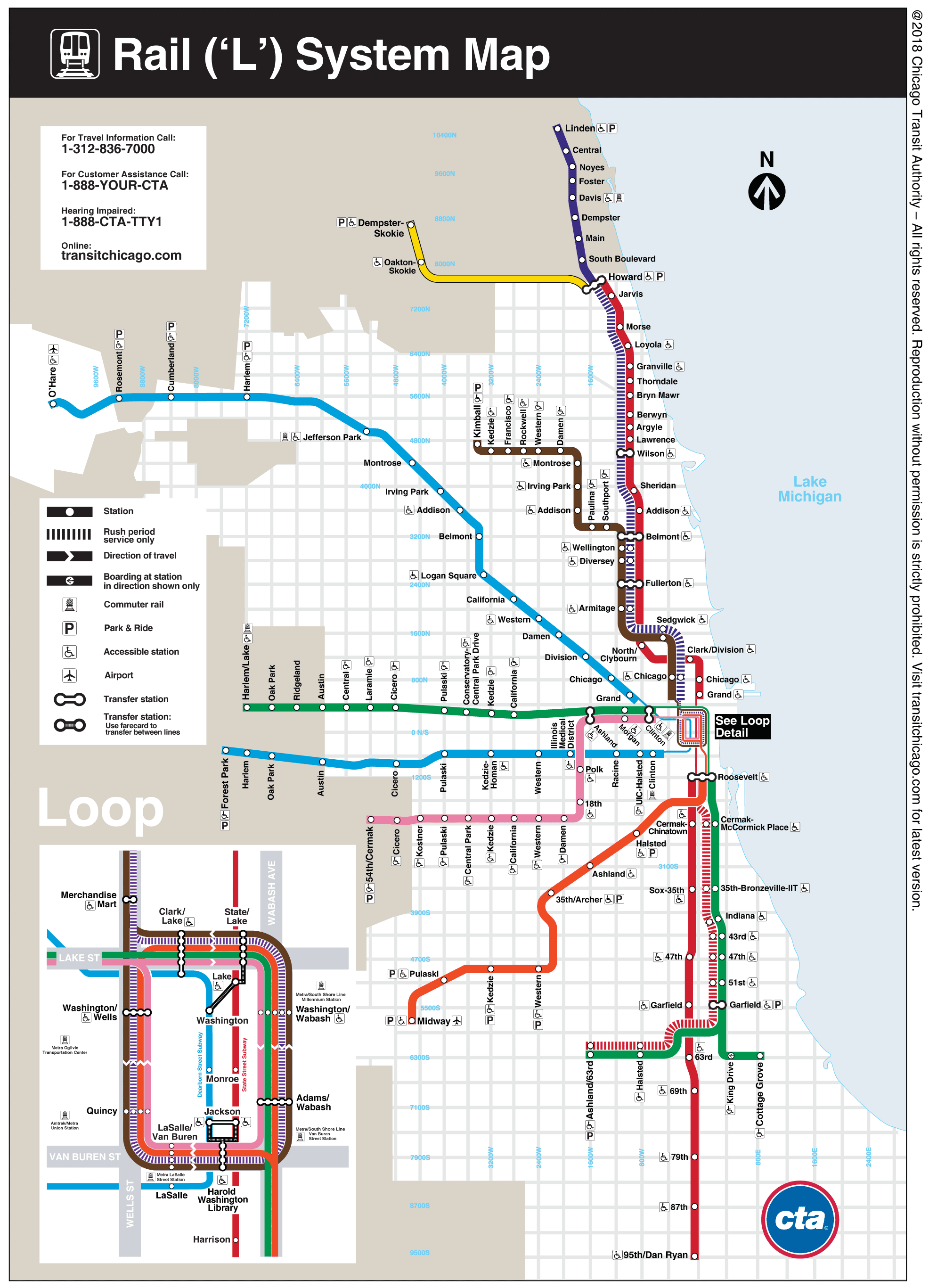 (Click to enlarge.) The Red and Purple lines run north and south through the heart of Chicago. Source: CTAIn December 2017 the transit agency qualified three contracting teams, including Walsh-Fluor, Chicago Rail Constructors and Kiewit Infrastructure Co., and issued a draft request for proposals, followed by a final request for proposals in April.
 The authority determined that the proposal submitted by the Walsh-Fluor team – Walsh Construction Co. II LLC and Fluor Enterprises Inc. – provided the best value to CTA, including project savings of more than 200 days and $297 million over other proposals. Walsh built the Wilson Red and Purple Line station, which was completed in 2017. Fluor has constructed other major U.S. rail projects, including the $2.1 billion Denver Eagle and the $2 billion Purple Line in the Maryland and Washington, D.C. suburbs.
The $2.1 billion transit modernization project was announced in 2014 and is funded by federal and local money. Currently, the transit agency is performing advance utility relocation work, which includes removing wires and poles and relocating utility equipment ahead of major construction beginning in the latter half of 2019.
Line Extension Program Manager
 The Chicago Transit Board also approved a separate contract of $20.9 million to HNTB Corp. as program manager for the Red Line extension (RLE). The program manager will oversee final environmental review and preliminary engineering work necessary to seek federal funding. The three-year contract includes seven one-year options for extension.
The proposed 5.3-mile extension would include four new stations near 103rd Street, 111th Street, Michigan Avenue and 130th Street. In January, the transit agency announced a preferred alignment for the RLE that begins the extension at 95th, travels south along the Union Pacific Railroad tracks from I-57 and then extends southeast from 119th Street to 130th. The extension project is intended to provide new access to rail service for distant South Side residents.
The next major step in the RLE project will be to produce a final environmental impact study that will include further preliminary engineering work and will analyze impacts of the proposed alignment. The transit authority expects to apply to the Federal Transit Administration for entry into the two-year project development phase for this project, a step needed to pursue federal funding under the competitive federal New Starts program. The agency said it plans to seek more than $1 billion in federal funds to support the project, estimated to cost $2.3 billion.