Smart, Autonomous Commercial Shipping Systems Using Artificial Intelligence
Peter Brown | October 17, 2018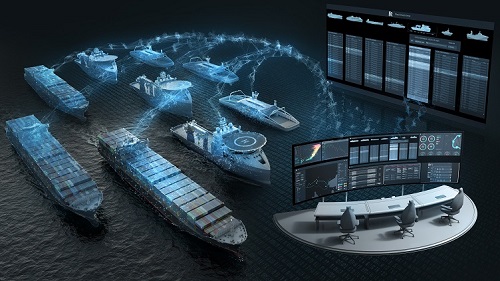 Enabling commercial ships to see their environment around them, even in the dark, could help safety and efficiency. Source: IntelRolls-Royce is building commercial systems that are smart and sophisticated — and eventually autonomous — using artificial intelligence powered by Intel’s Xeon Scalable processors and 3D NAND solid state drives (SSDs) for storage.
The Intel processors are being used onboard to turn commercial shipping vessels into floating data centers with heavy computation and AI inference capabilities. Rolls Royce’s Intelligent Awareness System (IA) uses sensor fusion and decision making by processing data from LiDAR, radar, thermal cameras, HD cameras, satellite data and weather forecasts.
This data relays information about the ship’s surroundings, which improves safety by detecting objects several kilometers away, even in busy ports. This especially comes in handy when operating at night or in bad weather.
The data collected is stored using Intel 3D NAND SSDs acting as a “black box” that secures the information for training and analysis once the ship has finished its voyage. Even compressed, the data can reach up to 1TB per day or 30 TB to 40 TB over a month-long voyage.
"This collaboration is helping us to develop technology that supports ship owners in the automation of their navigation and operations, reducing the opportunity for human error and allowing crews to focus on more valuable tasks," said Kevin Daffey, director of Engineering & Technology and Ship Intelligence at Rolls-Royce.
Given that about 90 percent of the world’s trade is carried out via international shipping, making the vessels safer is of critical importance, the companies said. Enabling such vessels to navigate and detect obstacles and hazards in real time is a possibly lifesaving decision not to mention saving the millions of dollars’ worth of cargo on board.
The system developed by Rolls-Royce and Intel has already been demonstrated in vessels in Japan in a recent pilot project where the ships were able to understand their surroundings at nighttime when it was not possible for humans to detect objects in the water.