Simplified Water Filtration System Reduces Costs
Nancy Ordman | April 04, 2017A modified membrane filtration system promises to make clean drinking water available in communities where providing potable water can be difficult. The new system is simple and low-cost to install and operate.
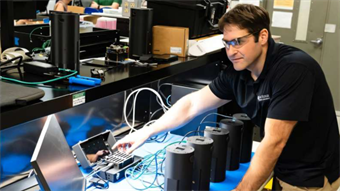
A team at the University of British Columbia recognized the effectiveness of membrane filtration systems to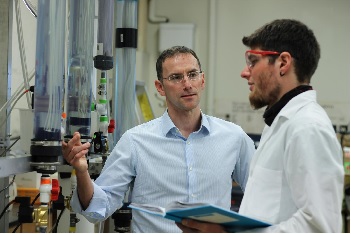 UBC civil engineering professor Pierre Bérubé (left) and his graduate student Lukas Dössegger. Credit: Clare Kiernan/University of British Columbia provide drinkable water. These systems are complex and expensive due to the necessity for anti-fouling methods, such as air sparging, backwashing and chemical cleaning, and are often out of reach for small or remote communities.
The innovative solution devised by the UBC team uses gravity to pull water through a series of fiber membrane tanks and a biofilm to break down pollutants. Every 24 hours system operators open and close a few valves to enable a small amount of air sparging. The system retains its effectiveness over time.
Researchers are installing a test system in West Vancouver, prior to providing systems to remote communities in Canada and elsewhere.
"Access to clean drinking water is a constant challenge for millions of people around the world. Our goal is to provide a model for low-cost, effective water treatment for communities, and to help locals help themselves as they build, operate and even expand their water treatment plants," said Pierre Bérubé, UBC professor of civil engineering and project lead.