
Killing Two Environmental Problems with One Biogas Digester
S. Himmelstein | May 05, 2017Academic researchers in Nigeria are developing cost-effective technology to address two environmental scourges: an invasive weed impacting agriculture in Africa and mismanagement of poultry sludge.
The Mexican sunflower (Tithonia diversifolia) was introduced to Africa as an ornamental plant decades ago and has become a major weed threatening agricultural production on the continent. Inadequate control of chicken droppings can result in nutrients, hormones, antibiotics and heavy metals aggregating in soils and surface water.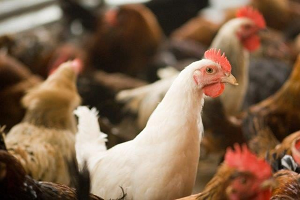 Processing chicken poop with an invasive weed produces fuel and fertilizer. Image credit: Tukaram.Karve/Shutterstock.com
Efforts to convert poultry poop into fuel aren’t entirely successful, since the material alone doesn’t transform well into biogas and requires co-digestion with plant materials such as switch grass. The researchers sought to combine the chicken waste with Mexican sunflower.
Pretreated chicken droppings and sunflowers were anaerobically digested together. More than 3 kg of biogas was produced from 8 kg of the feedstock, more than enough fuel to drive the reaction and have some leftover for other uses such as powering a generator. Residual solids from the process could be applied as fertilizer or soil conditioner.
The researchers documented a 54.44 percent increase in predicted biogas yield with pretreated versus untreated biomaterial.
Researchers from Landmark University and Covenant University participated in this research.



Not exactly lemonade, but there again, no one was handing them lemons.
The nitrogen carbon ratio is the most important aerobacly or not !...temp and duration are key as well ... scrubbing for clean gas a must, CO2 and NOx....as a rural solution on individual bases is ok , in a community setting, consideration of systems engeniring is a must , ...as per ex. the direct mix into the soil...or its dehydration .
It is an interesting concept, maybe urban chickens, grass clippings, and the home generator? I would not want to get any Mexican sunflower started here. I think it already grows in New Mexico (in the USA) also, but maybe I am thinking about a native wild sunflower that resembles the sunflowers in agriculture, but with smaller blooms.
In fact, various sub-species of Mexican Sunflower are a favorite of gardeners, but I wonder how farmers feel about these species once they get out in the fields and perhaps interfere with crops?