Streamlined Auto-Injector Designs Can Do Double Duty
March 06, 2017Sponsored content
One of the best ways of streamlining any manufacturer's costs is to standardize designs. That is particularly true in the pharmaceutical industry, and, in particular, where it concerns auto-injectors. The manufacturer of tomorrow will reflect material improvements currently underway to make designs more cost efficient as well as faster to produce while maintaining high quality.
Auto-injectors, those medical devices designed to deliver pre-measured doses of particular drugs, are spring-loaded syringes. They are specifically intended to be easy to use; therefore, once a pharmaceutical OEM creates an acceptable design, the ability to repurpose it would be financially appealing. As companies look toward creating products that are more modular and flexible in their capabilities, they'll benefit from cost and time to market advantages. The ability to swap out spring components will allow for more cost-effective integration of new technology.
Research and Markets predicts the global auto-injectors market will grow at an annualized growth rate of more than 8 percent during the next 10 years. The research firm reported that more than 50 auto-injectors are either currently under development or are commercially available by more than 20 companies. For example, Amgen, GSK, Sanofi and Palatin Technologies are evaluating late-stage pipeline drugs with auto-injectors.
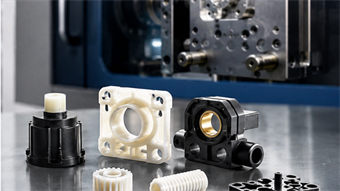
Typically, OEMs contract with new product development (NPD) firms to create individual auto-injectors around new drugs being brought to market. Once the NPD finalizes a working design, a contract manufacturer (CM) molds the plastic components, specifies and sources the metal components and, finally, sends all the parts to the OEM for final assembly, which includes loading the drug. The challenge in trying to create one design for multiple uses occurs because different drugs have different viscosities. Therefore, springs with different physical characteristics—composition, length and thickness—are required to provide spring rates with sufficient power to push higher viscosity drugs through the syringe to the needle, to deliver an exact amount of a particular drug.
That is why the manufacturing partner must be fluent with the design technology as well as how the springs control introduction of the surgical sharp or syringe needle, the delivery rate or dosage of the drug, and the automatic retraction of the needle. Having such a background allows for precision manufacturing of devices that perform well consistently from device to device without failure.
Case in point: a high-profile pharma OEM brought on Economy Spring to collaborate on a device design project with an NPD and CM. Using Economy Spring's expertise, the NPD was able to create an auto-injector to use with two unique drugs included within the OEM's scope. Economy Spring fabricated and supplies two different main springs with distinct rates to the molding CM, which then assembles them into the same plastic device housing: two springs, one housing. The springs appear identical, however, so Economy Spring needed to distinguish each to prevent confusion during assembly. The solution was to provide the springs to the CM in different colored trays. The CM’s automation system can now easily verify that the correct spring is being used by simply identifying the tray color on the line.
 In general, the plastic housing and components of a device can be designed to accommodate springs with rates that vary by as much as 30 to 40 percent. As a result, an auto-injector can be designed so that the metal spring components are interchangeable. OEMs should be mindful from the onset of an auto-injector project about these design considerations that result in time and cost saving efficiencies. Partnering with a qualified metal component manufacturer as early as possible is the best alternative to utilizing a successful device platform at a later point for more than one drug therapy. The result could be millions of dollars in saved R&D and production costs.
Economy Spring
29 DePaolo Dr.,Southington CT, USA
860.621.7358