Deep Fuel Desulfurization with Potassium Salt
Engineering360 News Desk | March 01, 2017Air pollution-causing sulfur is removed from gasoline and diesel fuels by hydrodesulfurization processes at oil refiners. While such technology removes sulfur down to a government-mandated level, highly refractory sulfur-containing heterocycles remain in petroleum fuels.
A process based on the use of potassium salts has been shown to remove these sulfur species and produce fuel with a sulfur content of about 2 ppm.
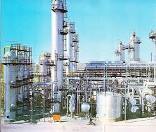 Potassium salt treatment lowers sulfur content in diesel to about 2 ppm.The researchers were initially testing ways to break carbon-oxygen bonds, which is most efficient when done with a precious metal catalyst such as platinum. A control experiment conducted without the metal catalyst demonstrated that the reaction still worked, and continued testing confirmed that a potassium salt, called potassium tert-butoxide, was driving the reaction.
The method was evaluated in partnership with BP on the company's refined diesel samples, reducing sulfur levels down from 8 ppm (comparable to the highest quality of diesel obtainable from a typical gas pump today) to an extremely low 2 ppm. They also repeated the experiment with diesel spiked with high levels of sulfur and achieved similar results.
The treatment could be used as an additional step in the oil refinement process to eliminate the last traces of sulfur in fuels.
Scientists from California Institute of Technology, BP, University of California (Los Angeles), ETH Zürich (Switzerland), and Nanjing University (China) participated in this research.