Modified Cement Emits Light for Roadways, Buildings
Riia O'Donnell | May 25, 2016To light roads and buildings without the need for electricity, a scientist from Michoacan, Mexico's University of San Nicolas Hidalgo (UMSNH), José Carlos Rubio, has created a light-emitting cement that has an estimated lifespan of 100 years. Because concrete is opaque and does not allow light to pass through, Rubio looked at the process to create cement step by step.
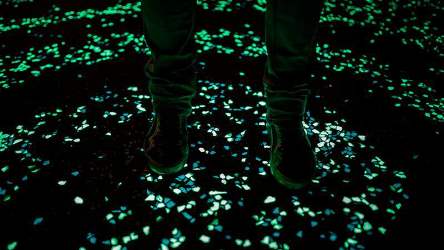 Light emitting cement used indoors. Credit :Investigación y DesarrolloMaking cement begins with a dust that is added to water. As the dust dissolves, it acts as a sort of effervescent pill, beginning to form a gel. Rubio likens this stage to a hair styling gel, but much stronger. As the gel is formed, so are flakes of crystal, which are unwanted by-products in hardened cement.
Rubio and his team focused on eliminating the crystals altogether to create a substance that holds only the gel-like qualities before it hardens. Light-absorbing materials were added to this substance and distributed through the product. The fluorescent material absorbs solar energy and returns that energy to the environment as light.
A structure, building or roadway made from the new cement will absorb energy during the day and emit light for around 12 hours. And, although some fluorescent materials have an average three-year life span because they are made with materials that decay under UV rays, the new cement-based fluorescents are resistant to the sun, and have an estimated life span of 100 years.
Currently available in blue or green, the material’s light intensity can be tuned to minimize glare. The team anticipates it will soon be able to offer more colors.