A slim solution for electrifying industrial gas heating
S. Himmelstein | April 17, 2026Industrial gas heating is of crucial importance to drive steam processes, sterilize products, process metals and perform other essential manufacturing tasks. Efforts to electrify these procedures via immersion heating in pursuit of decarbonization have not proven successful, as placing heating elements directly in the gas flow increases stress on the target material. A solution demonstrated by Rice University researchers reflects the philosophy that thin is in: Deploy carbon nanotube fibers (CNTFs) as a new type of electric heating element.
CNTFs can measure about 50,000 times thinner than a human hair and can conduct electricity better than copper while serving as strong conveyors of heat. These thread-like components could be used to replace metal heater coils to improve efficiency and support the electrification of industrial heating processes.
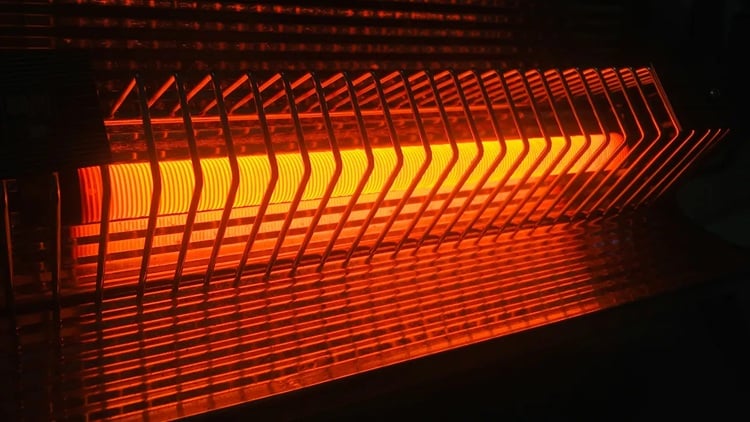 Source: Achudh Krishna/Unsplash
The performance of devices constructed from CNTFs, including single filaments, parallel arrays and textile-like fabrics, was evaluated in terms of specific power loading — the maximum heating power per unit mass that can be sustained before failure. As reported in the journal Small, the heating systems tested under different operating conditions consistently achieved higher specific power loadings than comparable metal-alloy elements. These improvements were most evident in nonoxidizing environments, where carbon-based materials can withstand far higher temperatures without degradation.
The CNTF fabrics exhibited more uniform heating behavior and reduced hot spot formation when compared with rigid metal meshes. These benefits underscore the ability of the fibers to spread heat efficiently.