Mineralized sawdust powers fire-resistant composite
Marie Donlon | March 26, 2026A fireproof material derived from sawdust mineralized with watermelon seeds has been developed by a team of researchers from ETH Zurich and the Swiss Materials Institute.
The composite material was produced using the mineral struvite, a crystalline, colorless ammonium magnesium phosphate known for its fire resistance. In addition to fire resistance, the material’s crystallization behavior has — until now — hindered it from combining with materials like sawdust. To remedy this, the team used an enzyme extracted from watermelon seeds to control the behavior of struvite, thus creating large crystals that fill the voids present between the sawdust particles and binding them together firmly.
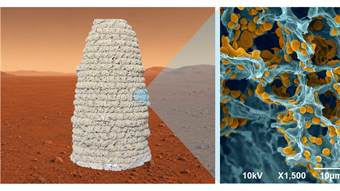
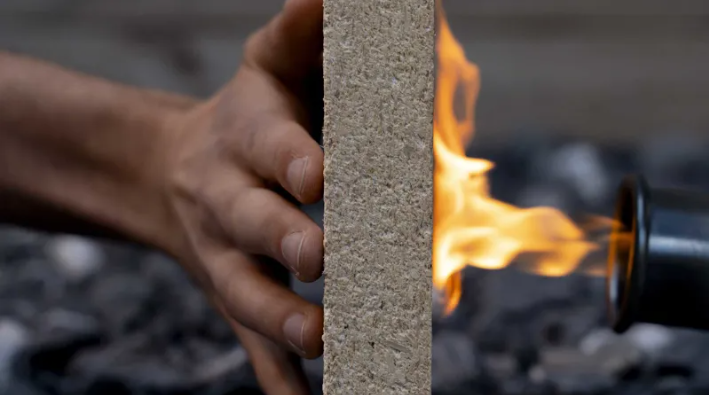 Source: Dan Vivas Glaser from Kürsteiner R et al. Chem Circularity
As soon as these materials are combined, the composite is pressed for 48 hours, then removed from a mold and dried at room temperature, resulting in a product with structural qualities similar to the timber it is derived from.
“The material is stronger under compression perpendicular to the grain than the original spruce timber,” the team said.
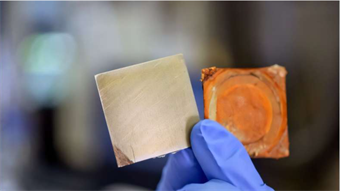
The material was tested in a cone calorimeter, which mimics how a material behaves when exposed to an external heat source. The team explained that while untreated spruce ignites after roughly 15 seconds, the struvite-treated sawdust composite took more than three times as long. Meanwhile, as soon as the material ignited, a protective layer of inorganic material and carbon quickly formed, thereby preventing further fire spread.
An article that details the process for creating the composite, “Enzyme-mediated consolidation of lignocellulosic materials with a flame-retardant and fully recyclable mineral binder,” appears in the journal Chem Circularity.