Scientists find path to safely reusing concrete
Marie Donlon | February 26, 2026A team of researchers from KTH Royal Institute of Technology and Tampere University has determined that reused concrete can gain an additional 50 to 100 years of service life when incorporated into new buildings.
The team has reportedly developed a framework that allows builders to reuse such structural elements like concrete, thereby saving resources and reducing construction's climate footprint.
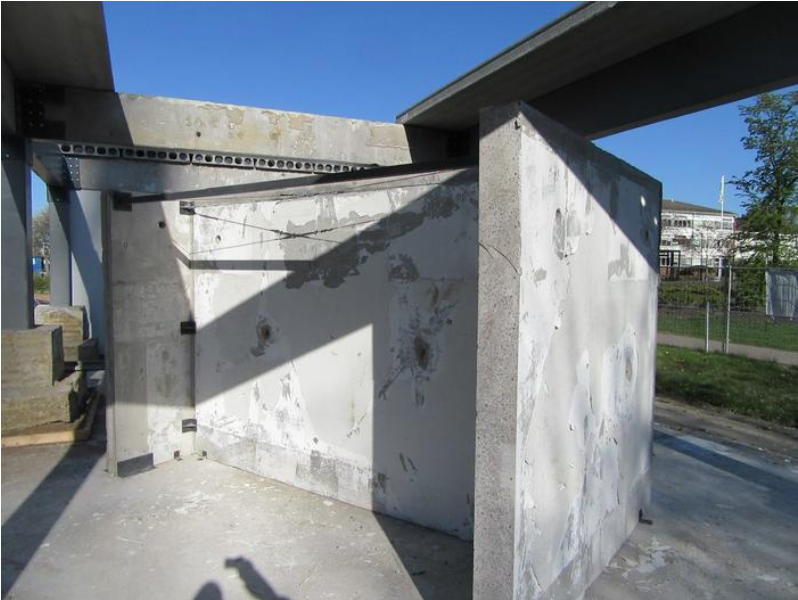 Source: KTH
“Reusing concrete is one of the most effective ways to cut emissions,” the researchers explained. “Our framework gives designers and engineers the tools to make informed decisions, reducing waste and pollution, and keeping materials in use longer — which is at the core of the circular economy.”
Absent dependable methods for assessing used precast concrete, reuse tends to be risky. However, data from two dismantled buildings in Sweden and Finland enabled the researchers to run thousands of computer simulations that they suggest allows for accurate predictions of concrete lifespan under assorted scenarios — such as indoor versus outdoor reuse and with or without repairs.
Using data from years of research and measurement on carbonation and corrosion in Nordic conditions, the researchers evaluated these risks.
The team suggests that these probabilistic forecasts are more reliable because they are performance-based and they rely on real measurements of the concrete’s condition following decades of use and exposure.
Humidity and rising CO₂ levels were observed to influence and accelerate the natural process of carbonation. “This is particularly critical to consider when exposure conditions change during reuse,” the team noted.
Specifically, carbonation reduces concrete’s protective alkalinity and can subsequently lead to steel reinforcement corrosion. Further, the team determined that by applying water-repellent coatings or silicone-based treatments can reduce corrosion rates by up to 70%, thereby extending the time before cracks first appear and ensuring structural integrity and service life for decades.
As such, the team concluded that concrete elements, even after decades of use, can be safely refurbished and reused, assuming their condition is assessed and that appropriate measures are applied.
An article detailing the work, “From durability to circularity: ensuring service life and enabling reuse of concrete in circular construction,” appears in the journal Materials and Structures.