Fruity flavors: How acidity influences taste and quality
Neha Shinde, courtesy of Mettler Toledo | December 11, 2025 Source: Mettler Toledo
Have you ever wondered why some fruits taste tangy and sharp, while others feel mellow and sweet on your tongue? What exactly governs this subtle play of flavors that can instantly change your mood? The answer lies deep within the chemistry of fruits, primarily in their pH levels.
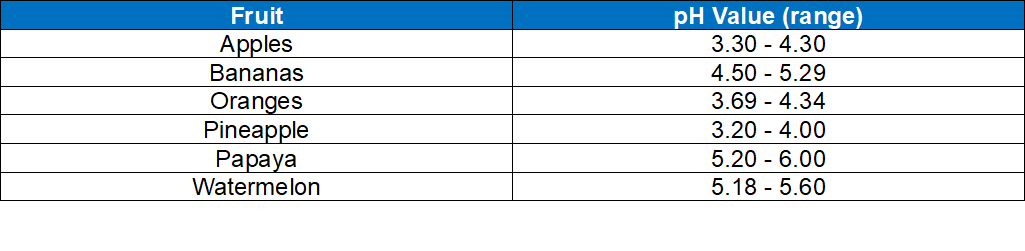
At its core, pH is a measure of how acidic or basic a substance is. In fruits, this acidity largely comes from organic acids such as citric, malic and tartaric acids, which vary in concentration depending on the fruit type, ripeness and storage conditions. Most fruits fall within an acidic to mildly acidic pH range, typically between 3 and 5, which directly impacts their flavor profile and shelf life. For instance, citrus fruits like lemons and oranges have lower pH values, making them more acidic and imparting a distinct sourness. In contrast, fruits such as bananas and melons possess higher pH values, giving them a sweeter, less tart taste.
Although most never consciously measure or even consider the acidity of fruit, pH plays a silent yet important role in shaping their taste, quality and safety. Additionally, the pH level impacts the stability and availability of various nutrients in fruits. Thus, the natural pH balance in fruits is integral not only to our taste enjoyment but also to the nutritional value we derive from them.
Beyond personal consumption, the measurement of pH holds critical importance in the fruit industry. pH is a fundamental parameter in assessing fruit maturity and quality. As fruits ripen, the concentration of organic acids changes, often leading to a decrease in pH. When fruits over-ripen, microbial activity can alter the pH, signaling degradation and loss of quality. Therefore, pH levels serve as indicators of freshness and potential spoilage. Monitoring these levels helps producers determine the optimal harvest time, ensuring fruits are picked at their peak flavor and nutritional value.
Consuming fruits right after they are harvested is often impractical. As a result, various preservation methods are applied to many of them. Preservation methods such as canning, pickling and fermentation are heavily reliant on precise pH control. For example, pickled fruits are maintained below a pH of 4.6 to inhibit the growth of harmful microorganisms and prolong shelf life. Maintaining this acidity barrier is crucial for food safety and preservation efficacy. Similarly, fruit juice manufacturers and processors, such as those in jam and jelly production, use pH measurements to regulate fermentation, optimize taste and ensure consistency across product batches.
Approximate pH ranges for common fruits based on the FDA's low-acid canned foods (LACF) guidelines include:
Despite its importance, measuring pH in fruits poses unique challenges. Unlike liquids, fruits are solid or semi-solid matrices, making it difficult to insert traditional pH electrodes without interference. The presence of pulp and fibers can clog or damage electrodes, leading to inaccurate or unstable readings. Many conventional methods require blending the fruit with water to create a homogenized sample, but this dilution can shift pH results and add preparation time.
Modern advancements have addressed these challenges with the development of specialized pH sensors designed for solid samples and fruit juices. Innovations such as spear-shaped sensor tips allow direct insertion into fruit flesh without damaging the sensor or the sample. Open junction designs prevent clogging by allowing sample debris to flow freely, while robust glass membranes offer fast, accurate responses. Integrated temperature probes and smart sensor technologies compensate for environmental variations, enhancing measurement reliability.
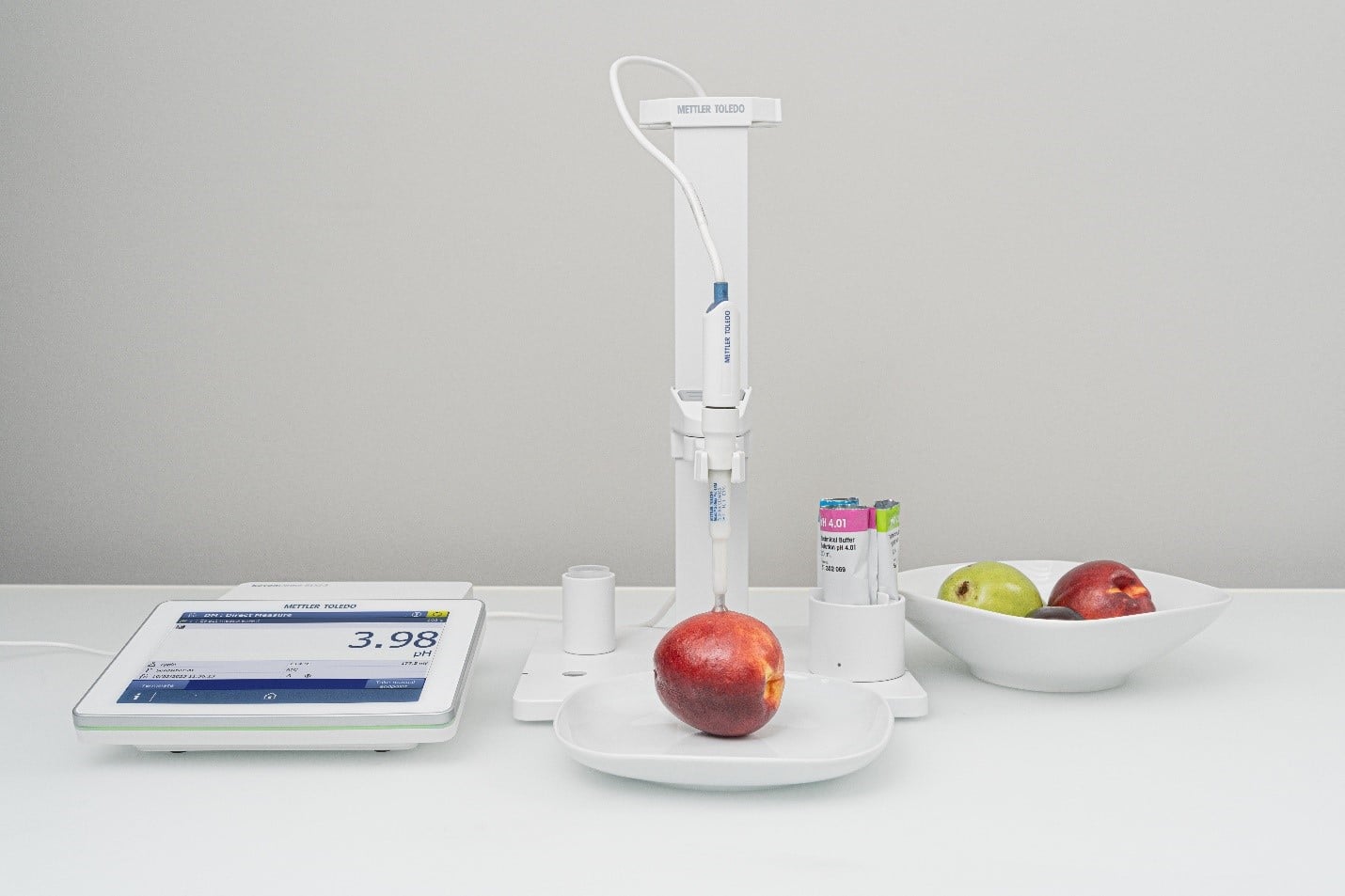 Figure 2. pH measurement of fruit using the InLab Solid Pro-ISM Sensor and SevenDirect Benchtop pH Meter. Source: Mettler Toledo, Lab pH Instruments.For example, instruments like the InLab Solids Pro-ISM pH sensor by Mettler Toledo exemplify these modern solutions, enabling quick and precise pH readings directly from fruit samples. This technology eliminates the need for dilution, reduces measurement time and improves consistency, which is invaluable for quality control in production lines and research laboratories.
Unlike typical sensors with ceramic fritted junctions that easily clog due to particulate matter in juices, the InLab Max Pro-ISM sensor’s design facilitates direct measurement of undiluted fruit juices. This eliminates the need for sample dilution, preserving the integrity of the juice’s pH and enabling faster analysis. The robust sensor technology ensures continuous and reliable pH monitoring, which is crucial for maintaining consistent batch quality during juice production.
In conclusion, the role of pH in fruits extends far beyond the simple sensation of sourness or sweetness. It is a fundamental chemical attribute that influences flavor, quality, safety and processing outcomes. While consumers may not directly measure pH, their choices and experiences are shaped by it every day. For the fruit industry, precise pH measurement is a cornerstone of quality assurance, safety compliance and product innovation.
Advances in measurement technologies continue to simplify and improve the accuracy of pH determination, bridging the gap between complex scientific analysis and practical application. This ongoing evolution empowers producers, processors and researchers to optimize fruit quality and safety, ensuring that the fruits we enjoy not only taste great but are also safe and nutritious. Understanding and harnessing the importance of pH in fruits is, therefore, an essential ingredient in the art and science of fruit consumption and production.
To contact the author of this article, email pHmatters@mt.com