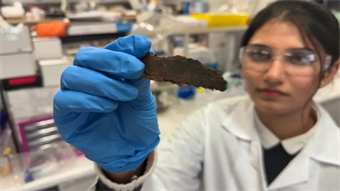
AI tool forecasts earthquake aftershock risk in just seconds
Marie Donlon | December 20, 2025A team of researchers from Edinburgh University, British Geological Survey and University of Padua in Italy are using artificial intelligence (AI)-powered tools to forecast aftershocks following earthquakes.
To accomplish this, the team trained machine learning tools using earthquake data obtained from seismic high-risk areas like California, New Zealand, Italy, Japan and Greece and applied the technology to earthquakes that were magnitudes of four or higher. Once trained, the team then tasked the system with making predictions about how many aftershocks would likely occur in the 24 hours following the first tremor of an earthquake.
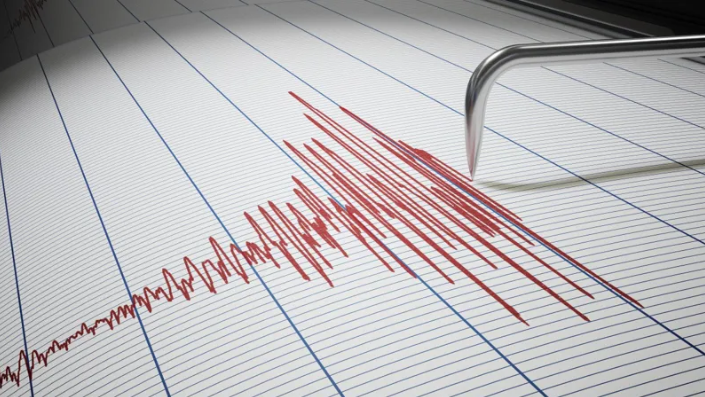
Following a series of trials, the team announced that while their AI model performed much like the Epidemic-Type Aftershock Sequence (ETAS) model — which is a tool commonly used in earthquake-prone countries like Italy, New Zealand and the U.S. — the new AI model outperformed the ETAS in terms of how quickly it returned results. The new AI platform reportedly delivered its results in mere seconds while the ETAS delivered its results in several hours.
“Their speed and low computational cost offer major benefits for operational use: coupled with the near real-time development of machine learning-based high-resolution earthquake catalogues, these models will enhance our ability to monitor and understand seismic crises as they evolve,” the researchers concluded.
The article detailing the technology, “Towards a deep learning approach for short-term data-driven spatiotemporal seismicity rate forecasting,” appears in the journal Earth, Planets and Space.