Automated solutions for batch and continuous mixing
Jody Dascalu | September 25, 2025Mixing operations are a fundamental unit operation across pharmaceuticals, food and specialty chemicals. Historically, automation in this area has focused on basic motor control and recipe execution. Over the last decade, however, advances in process analytics, digital integration and control architectures have shifted the role of mixing systems from isolated assets to fully instrumented, data-driven components of the production environment. This change is driven by requirements for higher reproducibility, regulatory traceability and tighter integration with upstream and downstream processes.
Increasing automation drivers
Investment in mixing automation is being shaped by three primary factors: regulatory requirements, product quality demands and labor availability. Regulatory agencies now expect detailed electronic batch records and traceability, which is difficult to achieve with manual systems. Variability in raw materials and the need for reproducible end products have also increased the emphasis on consistent process control. In addition, workforce shortages make it less practical to rely on operator intervention for routine adjustments.
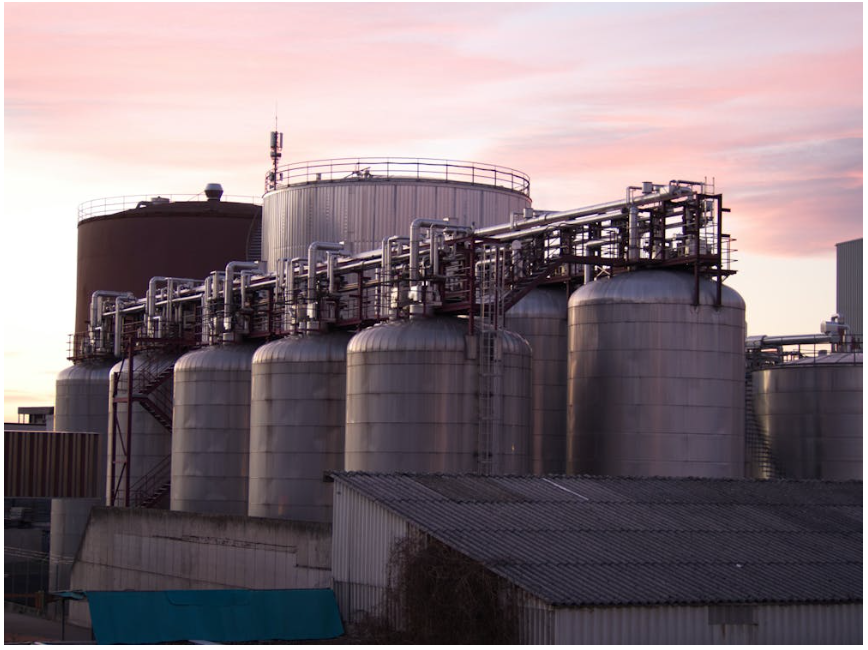 Stainless steel storage tanks connected with pipes at a manufacturing facility. Source: FCL by Photofabianni.com/Pexels
On the technology side, sensors and industrial networking have become less expensive and more robust, while edge computing allows for local control and analysis without depending on centralized systems. Together, these factors are pushing both batch and continuous systems toward higher levels of automation and tighter integration with plant-wide information systems.
Batch automation and compliance
Batch mixing remains the predominant approach in industries where product diversity, regulatory oversight and recipe complexity are high. Automation has become standard in this space, primarily through programmable logic controllers (PLCs) and supervisory control systems executing defined recipes.
Recipe automation ensures consistent dosing, temperature control and agitation profiles, which in turn supports compliance with regulatory frameworks such as FDA’s 21 CFR Part 11 and GMP standards. Automated traceability with integrating weigh scales, barcode systems and audit trails, has largely replaced manual documentation, reducing the risk of operator error and enabling faster quality review.
Integration with higher-level Manufacturing Execution Systems (MES) and Enterprise Resource Planning (ERP) platforms is increasingly common, allowing batch records and production data to feed directly into broader supply chain and compliance systems. However, most implementations are still oriented toward execution and documentation rather than dynamic optimization.
Recent developments have introduced inline analytics to batch systems. Spectroscopic probes, torque measurement and acoustic sensors provide real-time visibility into blend homogeneity and viscosity. These data streams are starting to be tied into adaptive control logic, allowing adjustments during mixing rather than post-process correction.
Continuous automation and throughput
Continuous mixing, long favored for high-throughput operations, is gaining adoption in sectors beyond bulk chemicals, particularly in food and pharmaceuticals where regulatory bodies have begun supporting continuous processing frameworks.
Traditional proportional–integral–derivative (PID) loops remain the backbone of control, regulating feeder rates, impeller speed and thermal balance. However, more advanced strategies such as Model Predictive Control (MPC) are being layered on top, particularly in installations where raw material variability or product critical quality attributes (CQAs) require tighter precision.
The enabling technology for this shift is the growing use of high-precision feeders and inline sensors. Mass flow meters, near-infrared spectroscopy and particle size analyzers deliver data in real time, allowing deviations to be detected and corrected within seconds. This creates a form of embedded quality assurance, reducing reliance on downstream testing.
Digital twin models are another area of rapid uptake. By simulating residence time distribution, shear exposure and temperature profiles under varying feed conditions, engineers can validate control strategies before implementation and scale up with reduced empirical trial-and-error. This shortens commissioning cycles and lowers risk in new product introductions.
Systems integration and data management
Mixing equipment is shifting from stand-alone operation toward integration with plant-wide networks. Modern systems are expected to communicate not only with local PLCs and HMIs but also with higher-level MES and ERP platforms. This requires standardized protocols and more attention to cybersecurity than earlier mixer designs.
The greater level of connectivity means that mixers generate and share large volumes of high-frequency data from sensors, feeders and control loops. In pharmaceuticals, this data supports electronic batch records and audit requirements. In other industries, it is applied to predictive maintenance, energy tracking and process optimization. The main challenge is filtering and structuring the data so it is useful at both the operator and enterprise levels.
As integration continues, mixers function less as isolated machines and more as data nodes within the production line. This supports tighter coordination with upstream material handling and downstream packaging, while forming a base for more advanced analytics. In regulated environments, the approach is consistent with Quality by Design principles, and in broader manufacturing it aligns with the move toward hyperconnected, continuously monitored systems.
Toward adaptive control
Current development trajectories point toward progressively autonomous systems. Machine-learning models trained on historical process data are beginning to complement traditional control logic, enabling predictive adjustment to raw material variability before quality deviations occur. Inline spectroscopy, torque monitoring and residence-time distribution measurements are being coupled with adaptive controllers and model-predictive control frameworks, moving both batch and continuous systems closer to closed-loop optimization.
In the near term, hybrid configurations will see the most growth: batch systems adopting continuous monitoring and adaptive feedback, and continuous systems incorporating recipe-driven flexibility. Edge computing architectures will increasingly handle local optimization and fault detection, reducing latency and dependency on centralized systems. Over the next decade, the likely end state is a shift from operator-supervised mixing toward largely self-optimizing units that can maintain consistency across variable feedstocks with minimal intervention.
Outlook
While batch and continuous mixing have historically been distinct domains, their automation trajectories are converging. Batch systems are incorporating more real-time feedback and adaptive control, while continuous systems are becoming more flexible and recipe-driven. The logical progression is toward hybrid systems that combine the strengths of both, ultimately leading to self-optimizing units that reduce operator dependency while improving yield and consistency.