From carbon to candy: Chinese tech turns CO2 into sugar using methanol conversion
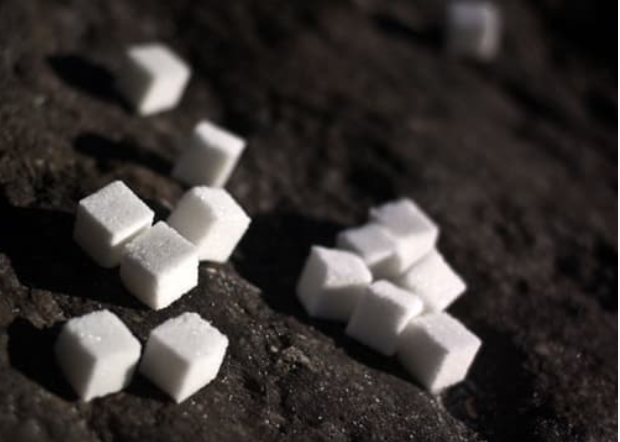
Marie Donlon | July 16, 2025A team of researchers from Tianjin Institute of Industrial Biotechnology, part of the Chinese Academy of Sciences (CAS), has developed a new method for converting methanol into white sugar — otherwise known as sucrose — without using farmland or crops in an approach that promises to one day help turn captured carbon dioxide (CO2) into food.
According to its developers, the new so-called biotransformation system does not rely on sugar cane or sugar beet cultivation — both of which require large amounts of land and water. Rather, the researchers used enzymes to transform methanol, which can be manufactured from industrial waste or by chemically treating CO2, into complex sugars.
 Source: David Goehring/Flickr
“Artificial conversion of CO2 into food and chemicals offers a promising strategy to address both environmental and population-related challenges while contributing to carbon neutrality,” the team explained.
The researchers added that the approach not only manufactures sucrose but can also be modified to create other carbohydrates like fructose and starch.
The team used an approach called in vitro biotransformation (ivBT) that creates useful molecules outside of living organisms using enzymes.
“In vitro biotransformation (ivBT) has emerged as a highly promising platform for sustainable biomanufacturing,” the researchers explained. “In this work, we successfully designed and implemented an [ivBT] system for sucrose synthesis from low-carbon molecules.”
The researchers created a high-efficiency pathway to convert methanol into sugars using a series of fast, low-energy chemical reactions, achieving a conversion rate of 86%.
“This study established several ivBT platforms for the conversion of low-carbon molecules, which can be derived from chemical reduction of CO₂ or chemical/biological conversion of industry wastes, into high-carbon (C≥12) sugars,” the team added.
In addition to creating sucrose using methanol, the team also produced starch using less energy than other similar techniques. The approach could potentially work for other complex sugars, beyond sweetening. Specifically, the team made fructose, amylose, amylopectin, cellobiose and cellooligosaccharides — carbohydrates used not just in the manufacture of food, but also in pharmaceuticals and industrial applications.
“Together, our system provides a promising, plant-independent route for de novo synthesis of structure-diversified oligosaccharides and polysaccharides,” the researchers said. Such complex sugars are necessary for the manufacture of everything from energy storage in the body to medical treatments.
An article detailing the process, "De novo artificial synthesis of hexoses from carbon dioxide," appears in the journal Science Bulletin.