Microbes minimize hydrogen costs at depleted oil fields
S. Himmelstein | July 16, 2025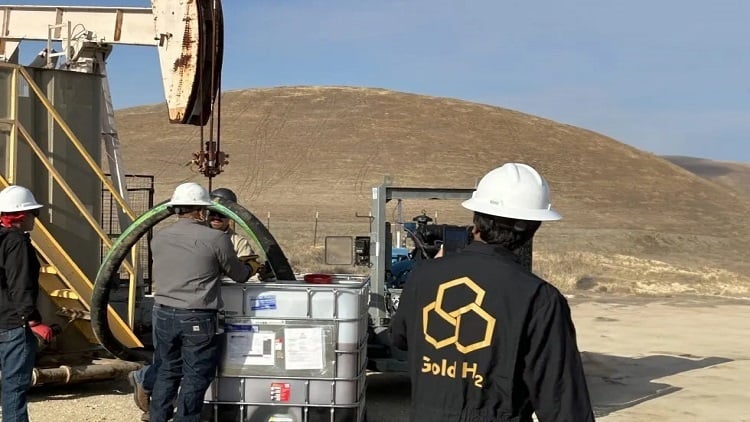 Field test of the technology at a depleted oil well in California. Source: Gold H2
Reliance on electrolytic technology to produce hydrogen from water typically increases the cost of this alternative fuel relative to fossil fuel-based routes. A less costly and more environmentally sustainable process for hydrogen generation has been demonstrated by Gold H2.
The Texas-based startup demonstrated a biotechnological approach during a recent a field trial at a retired oilfield in California’s San Joaquin Basin. A proprietary blend of microbes and nutrients injected into nearly depleted oil reservoirs serves to break down the remaining oil and generate hydrogen. The produced gas is then pumped to the surface. The process exploits oil that cannot otherwise be produced to yield hydrogen in a clean and cost-effective manner.
The company’s process does emit some carbon dioxide during hydrogen purification system operation, but the company maintains that the emissions would be comparable to green hydrogen produced by electricity and below gas derived from fossil fuels. The field test produced hydrogen at just 40% purity, indicating the need that it will require further processing and purification in addition to a continuation of field testing and research to scale up the technology.
Gold H2 contends that such use of existing infrastructure and unproduced oil can provide hydrogen at a cost of $0.50 per kilogram, which could make it cost-competitive with natural gas.