Smart ‘band-aid’ for organs wirelessly delivers medication on demand
Marie Donlon | May 09, 2025A wireless, paper-thin patch that attaches to an organ to create a vehicle for drug delivery has been developed by researchers from Beihang University and Peking University.
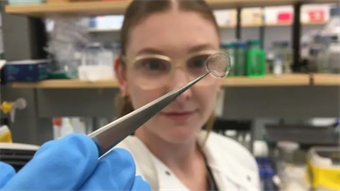
According to its developers, the electronic patch, dubbed the NanoFLUID "band-aid," functions — much like its name suggests — as a band-aid for organs. This, the researchers reported, is instead of functioning like traditional drug delivery systems, which send vague medication packages throughout the body that require higher doses than necessary, and might even harm organs in the process of trying to reach their destination.
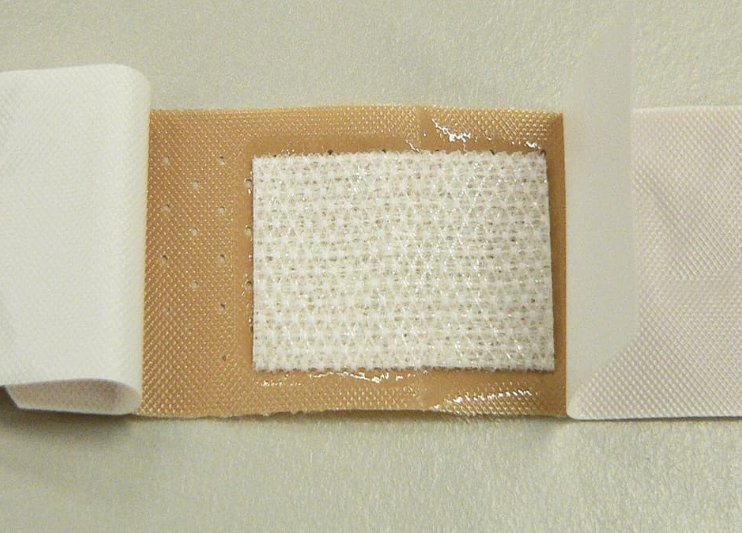 Source: Rama
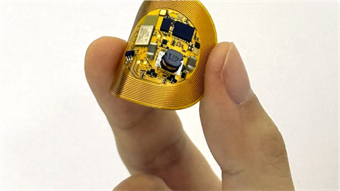
The researchers created the battery-free, chipless, soft nanofluidic intracellular delivery patch, which reportedly offers enhanced and customized delivery of payloads to targeted internal organs.
The NanoFLUID “band-aid” features flexible electronics and micro-nano processing technologies to build a wireless power supply that helps the drugs to arrive at their intended destination.
“It can safely perforate cell membranes at low voltage and, through the ultra-high electric field strength formed within its nano-pores, deliver drug molecules to the target site rapidly and precisely. The nanopore-microchannel-microelectrode structure enables the safe, efficient, and precise electroperforation of the cell membrane, which in turn accelerates intracellular payload transport approximately 105 times compared with conventional diffusion methods while operating under relatively low-amplitude pulses,” the researchers added.
The NanoFLUID patch was tested under several scenarios, including in the treatment of breast tumors and acute liver injury, as well as modeling tumor development. The team confirmed its efficiency, safety and controllability for organ-targeted delivery.
“NanoFLUID-mediated in vivo transfection of a gene library also enabled efficient screening of essential drivers of breast cancer metastasis in the lung and liver,” the team concluded.
An article detailing the bandage, “A battery-free nanofluidic intracellular delivery patch for internal organs,” appears in the journal Nature.