6 strategies for zero-waste manufacturing
Jon Lowy | February 25, 2025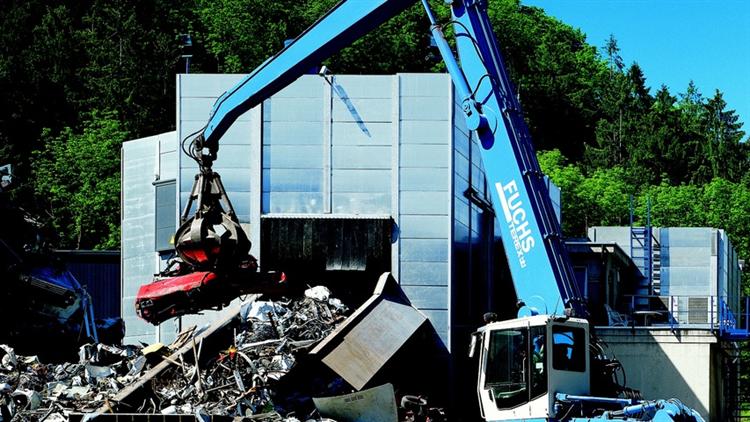 The automotive industry is a great example of product end-of-life planning - consumables are recovered and many raw materials are reprocessed.
Our age is one in which environmental consciousness is driving significant changes across all sectors and industries. The principle of zero-waste manufacturing has emerged as a cornerstone of sustainable production practices, although zero-waste is an aspirational target, rather than a reality.
By working at minimizing waste generation and maximizing resource utilization efficiency, manufacturers can reduce their environmental footprint, cut costs significantly levels and enhance their brand reputation as a green-focused community member.
What truly is 'zero waste'?
Zero-waste manufacturing is a rather loose philosophy aimed at eliminating energy, material and labor through improvements to processes, equipment and recycling. Established manufacturing models tend to accept waste as a required byproduct. A zero-waste approach treats waste as a pure-burden cost and as a resource opportunity for reuse or recycle. This is achieved (and prioritized) through staff education, improved process efficiency and the adoption of aggressive lean production techniques.
The actionable intentions in a zero-waste methodology are typically threefold.
1. Design products with minimal material requirements and implement processes which have lower environmental impact and lower energy needs.
2. Implement systems within each process to recover or capture of waste materials, and explore reuse or recycle avenues for these valuable resources.
3. Demand new approaches to enhance sustainability at each turn. This in often requires a back-to-the-mine revision of every step in the supply chain, from raw materials upwards, to understand the required evolutions and implement real change.
Zero-waste strategies, if realized, can be financially significant, from secondary supply chains, materials recovery and consumer popularity. In addition, steps toward zero-waste can sometimes be very easy - many materials and processes are legacy, ripe for innovation.
One thing to note is that zero-waste is an ideal state. It is an aspirational goal and organizations must remember that it is a journey. Incremental and relational improvements are important milestones.
Achieving zero-waste manufacturing requires a multifaceted approach, incorporating technology, process optimization and most importantly, cultural shifts.
1. Adopt circular economy principles
The circular economy aims to create a closed-loop system where resources are continuously reused and recycled. By designing products with the end of life in mind, manufacturers can ensure materials remain in circulation rather than becoming waste.
This is best illustrated by automotive manufacture. Many modern cars are scrapped for nearly every consumable part, from glass to sheet metal. This is likely to grow in the age of electric vehicles, as OEMs may want to buy back key circuitry, software and components.
2. Implement lean manufacturing
Lean manufacturing focuses on reducing waste through the streamlining of processes and elimination of inefficiencies. Techniques such as value stream mapping, Kaizen, and Just-In-Time (JIT) production can help identify and address waste sources.
Again, the automotive sector illustrates this well, where Toyota has long practiced lean implementation and defined the strategies that are now normal across the industry. Their production system is a benchmark for lean manufacturing, emphasizing efficiency and waste reduction as living targets involving the entire workforce, at a culture-level.
3. Leverage advanced technologies
Technology offers pivotal benefits in achieving zero-waste goals. Innovations such as the internet of things (IoT), artificial intelligence (AI) and additive manufacturing enable real-time monitoring, predictive maintenance and resource optimization.
IoT sensors and data analytics help track resource usage and identify areas for improvement through dynamic analysis of both the small - actual weight of waste - and the large - such as overall energy strategies and process/procedure timing.
Predictive algorithms operation in data-oceans and through AI applications can optimize production schedules, reducing material waste and energy consumption.
Additive manufacturing is often viewed as minimizing material waste by building products precisely as required, rather than through waste-involved and extractive processes. While this tool is nascent in terms of mass production, there are signs that the early-adopter sectors that can be less cost sensitive are moving toward this as a fundamental production tool.
4. Optimize material supply and demand
Efficient material usage is at the heart of zero-waste manufacturing. Standardization helps reduce waste by standardizing components and materials across product lines. Scrap management extracts value and diminishes waste outputs by collecting and repurposing scrap materials. And material substitution, using reduced environmental impact materials, can remove removes large volumes of chemical materials.
Apple gets the image and financial benefit from careful management of cuttings in the extractive manufacture of PC, phone and other outer cases. In reality, this waste is a byproduct of the choice to use machine-from-solid mass production, but not allowing it to become waste-material is important.
Partnering with suppliers who prioritize sustainability, optimizing transportation routes/distances to reduce fuel consumption and closing the loop on delivery packaging can all reduce the waste stages in a supply chain process.
5. Educate and empower employees
Creating a zero-waste culture requires the active participation of employees at all levels. Regular training and awareness programs can help instill sustainable practices in daily operations.
Encouraging employees to identify waste reduction opportunities through incentive programs or suggestion boxes and through basic process education/training can greatly enhance waste capture and reduction, as nobody sees more of the potential than the production staff, once their attitudes are aligned with zero waste and their eyes are opened.
6. Monitor and measure progress
Establishing KPIs for the whole organization, with more targeted goals at team and individuals levels, helps to track waste reduction efforts makes the targets real and tangible to all involved. Regular audits and reporting ensure accountability and continuous improvement.
Typical KPIs concentrate on waste diversion rates, energy efficiency gains, and carbon footprint reduction strategies.
Delivering on zero waste
Many companies have successfully adopted zero-waste manufacturing tactics and are setting examples for the industry. For example, Patagonia; the outdoor apparel brand uses recycled materials in its products and encourages customers to repair and reuse items. This heavily focuses on the recycling of single use PET packaging for the manufacture of microfiber fabrics. Personal care and home products giant Unilever reports having achieved zero-waste to landfill in over 600 facilities, through redesign of its packaging and optimized manufacturing processes,
The challenges in implementing an effective zero-waste policy are considerable at the outset. The technical barriers can be higher, when legacy equipment and processes require extensive re-retooling and plant revisions. The cultural resistance can also be considerable at the start. Employees and stakeholders may resist changes to established workflows.
However, the push toward more than token sustainability is gathering momentum, with governments and consumers demanding higher sustainability. As regulations tighten and the demand becomes normalized, companies that embrace zero-waste principles will be better positioned to thrive.
A zero-waste approach is both technically feasible and, through careful implementation and identification of resource implications, financially beneficial. It’s important, however, to emphasize the incremental nature of the process, and to avoid the over promise that has dogged some manufacturers.