Sensors for detecting oil in marinas
GlobalSpec News Desk | February 20, 2024High tech products and solutions companies PhotonTec and LDI Innovation Ltd, have jointly developed LED-based fluorometric oil and fuel sensing products: the new BlueHawk and TinyHawk fluorosensors.
According to PhotonTec, “Ours are the only sensors that can operate in two different ultraviolet (UV) wavelength ranges. Wavelength ranges are A – right below visible, and B- a little further down in wavelengths. We’re the only ones doing B, which is much more sensitive and critical for lighter oil detection like gasoline. UV A works well on heavier oils like crude and lubricants,” the companies added.
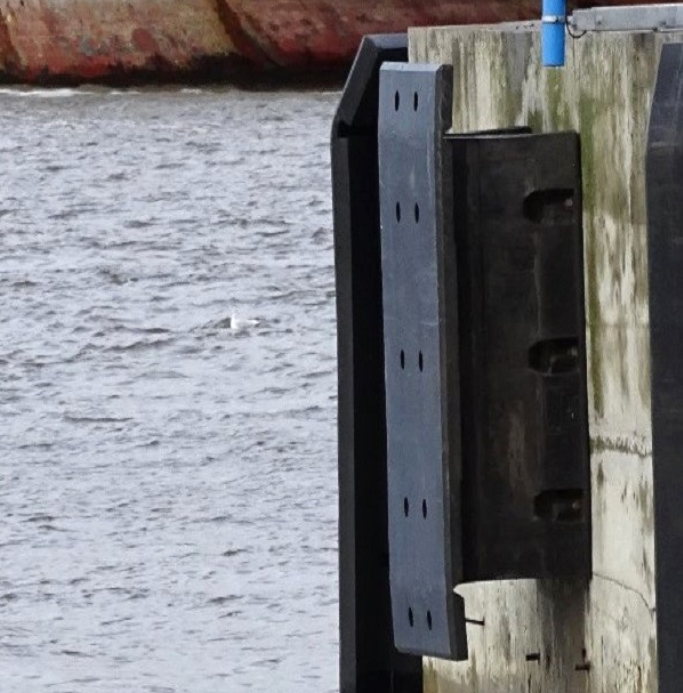 Source: PhotonTec
Further, the BlueHawk and TinyHawk products reportedly have patented coaxial designs made for high sensitivity and with a high tolerance for varying surfaces such as areas with high tidal ranges or rough waters. Meanwhile, the internal LED health monitoring system and control helps to eliminate false alarms.
The companies explained that the sensors also come equipped with extra-long sensing distances that range up to 33 ft and feature a wide scan/installation angle of up to 45° from vertical, which means that the sensors can be placed on a surface like a pile and monitor a large area of a marina basin.
The sensors can also detect land-based spills, which is a significant feature for facilities storing fuel or oil in upland tanks.
The tube-looking sensor, which is the main part of the unit, is mounted vertically on a holder so that it can look down on the water at up to a 45° angle, the companies revealed. This reportedly enables the device to sense contamination even if it is originating from a vessel moving around the basin.
Specifically, the larger BlueHawk model is about 10 inches X 4 inches, while the smaller TinyHawk is 3.5 inches X 4 inches, making it possible to fit in tighter spaces. The two sensors both monitor up to 10 ft distances and 33 ft distances, respectively.
According to the companies, both fluorometric sensors emit UV light pulses onto a scanned surface. When the light interacts with hydrocarbon contamination, it turns fluorescent. The sensor detects the fluorescence, measures its intensity and activates an alarm. The BlueHawk sensor features coaxial optics, which means just one big lens sits inside the sensor, delivering lots of light out from the UV LED. The same lens and apertures detect reflections from the spill.
The sensors also come with an option for chlorophyll-A detection, for detecting algae. As marinas face challenges from issues such as red tides that block sunlight and choke off water life, an alert that algae are building up might help prevent larger problems.