A new TWIST for nuclear reactor testing
S. Himmelstein | November 10, 2023Researchers at the U.S. Department of Energy’s Idaho National Laboratory (INL) have devised a new experimental tool to study nuclear fuel under simulated loss of coolant accident conditions in INL’s Transient Reactor Test (TREAT) Facility. A specialized experiment holder called a TWIST capsule has been engineered to hold a fuel sample surrounded by water, which can rapidly drain away during testing to simulate loss of coolant in a light water reactor environment.
The recent experiment was the first of its kind to be conducted in the U.S. since INL’s Power Burst Facility shut down in the mid-1980s. The TWIST experiment restores the ability to perform loss of coolant accident testing and supports the development of accident tolerant fuels that could extend operating cycles and reduce the amount of fuel needed to operate commercial reactors.
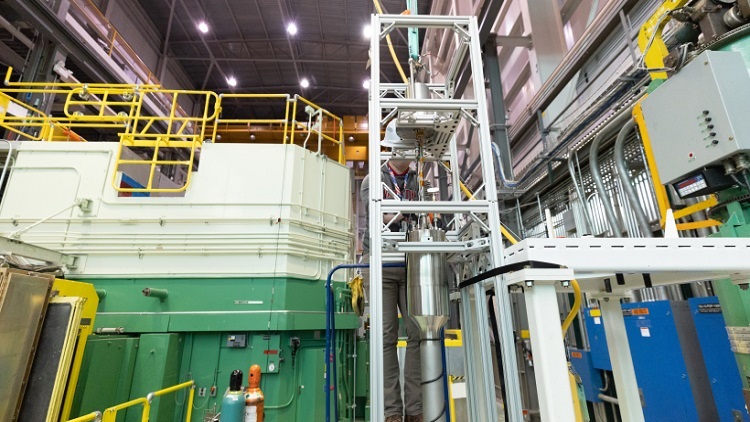 The TREAT reactor. Source: INL
TWIST joins the recently developed Temperature Heat-Sink Overpower Response (THOR) capsule that houses fuel experiments designed to mimic the conditions of fast reactors during temperature transients, complete with specialized instrumentation to monitor how fuel pins respond to the conditions in real time.
The TWIST experiment is paired with TREAT’s transient pulses, which are short, sudden bursts of energy that are five times more powerful than a commercial reactor, to simulate loss of coolant accident conditions in a controlled environment. INL made modifications to TREAT to accommodate a larger experiment rig that can be used by TWIST and future experiments at the facility. The larger rig will also be used for upcoming sodium loop tests to support the development of TerraPower’s Natrium small modular reactor.