Turning bugs into bioplastics
Marie Donlon | August 15, 2023Researchers from Texas A&M University are developing biodegradable plastics from insect waste.
A chemical present in the carcasses of black soldier flies reportedly features several different proteins and nutritious compounds, making it ideal for a number of applications including as a bioplastic, according to the researchers.
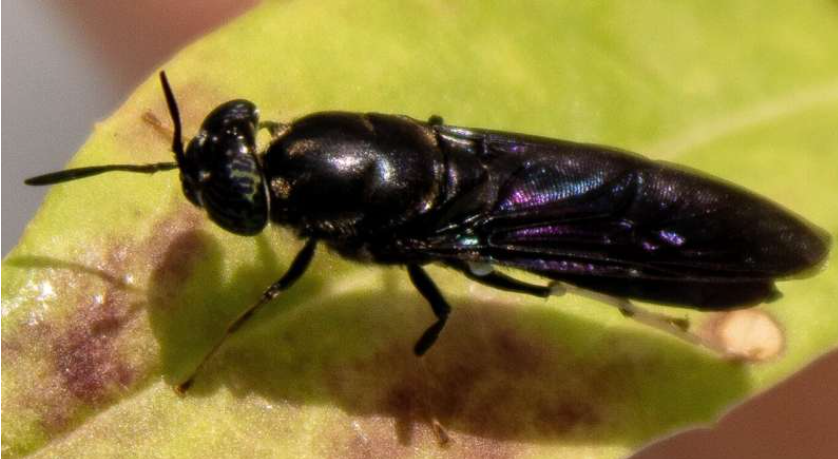 Black soldier flies are a good source of chemicals to make bioplastics. Soure: Cassidy Tibbetts
The team set out to extract and purify chitin, a primary component of black fly carcasses, via assorted processes including ethanol rinses, acidic demineralization, basic deproteinization and bleach decolorization.
Further, the researchers have converted some of the purified fly chitin into a polymer called chitosan. To accomplish this, the team stripped off chitin's acetyl groups, thereby exposing chemically reactive amino groups, which can be functionalized and subsequently crosslinked. These steps in the process reportedly transformed chitosan into bioplastics including superabsorbent hydrogels.
From here, the team aims to break down chitin into its monomeric glucosamines — or small sugar molecules — to eventually manufacture bioplastics including polycarbonates or polyurethanes, which are typically derived from petrochemicals.
Products derived from this process are expected to degrade once discarded, thereby removing one source of plastic waste.
The researchers explained: "Ultimately, we'd like the insects to eat the waste plastic as their food source, and then we would harvest them again and collect their components to make new plastics. So the insects would not only be the source, but they would also then 'consume' the discarded plastics."
An article detailing the technology, "Harvesting of building blocks from insect feedstocks for transformation into carbohydrate-derived superabsorbent hydrogels," will be presented at the fall meeting of the American Chemical Society (ACS), ACS Fall 2023.