Car and construction components derived from lemon peels, almond shells
Marie Donlon | March 27, 2023A team of U.K. researchers is turning natural materials such as farm waste into industrial materials for the automotive and construction industries.
Under the BARBARA project, which aims to develop new bio-based materials through fused filament fabrication, or 3D-printing, researchers are transforming agricultural residues — almond shells, lemon peels, cornstarch, pomegranate skins — into additives for biopolymers used in the making of car part and construction mold prototypes, for instance.
The aim of the BARBARA project in using agricultural residues in the making of such products is two-fold: it reportedly cuts waste while simultaneously reducing carbon dioxide emissions, according to the researchers.
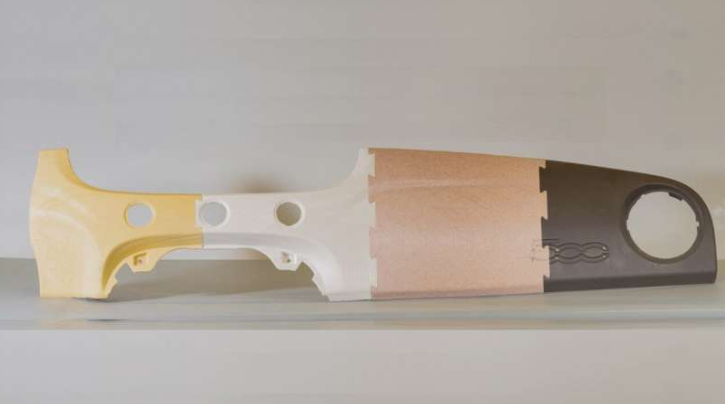 cA Fiat 500 dashboard fascia made of lemon peel, almond shells and pomegranate skins. Source: BARBARA project
So far, materials developed feature almond shells that could be used in lieu of plastics, pomegranate and lemon pigment, pomegranate biomordants and lemon fragrance, leading to materials with different colors, textures, aromas and antimicrobial properties.
With these new materials, the researchers have reportedly printed prototype door trims and a dashboard fascia for the automotive industry and a mold for truss joints for the construction industry.
The BARBARA researchers report that the new materials have demonstrated improved mechanical, thermal and aesthetic properties of such products. Further, the new materials are reportedly better for the health of workers who handle these products during the manufacturing process.